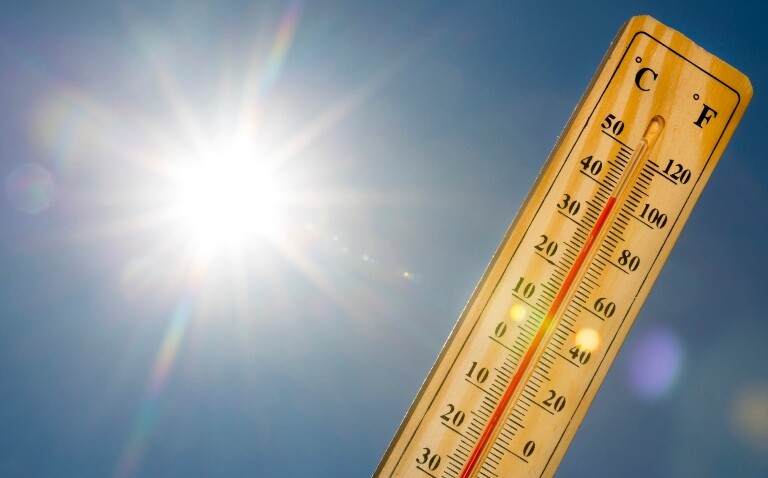
The number of heat-related deaths reported in England last summer was lower than expected, suggesting successful coordinated action across the health and care system.
The latest UK Health Security Agency (UKHSA) data showed that heat-related deaths were about half the number expected for summer 2025, despite being the warmest on record, with an estimated 1,504 heat-associated deaths across five heat episodes.
Based on recent historical associations between temperature and mortality, modelled estimates predicted 3,039 heat-associated deaths for England during this period, meaning 1,535 fewer deaths than expected were observed.
According to the UKHSA, several factors may have contributed to this reduction. While it is difficult to ascertain causality, the UKSA said the system-wide response to heat, including national and local implementation of the Adverse Weather and Health Plan and heat alerts, may have helped reduce harm during these periods.
Dr Agostinho Sousa, head of extreme events and health protection at UKHSA, said: ‘As shown in our latest assessment, the relationship between periods of hot weather and increased mortality remains clear.
‘The fact that observed heat-associated deaths were significantly lower than modelled estimates across all five heat episodes suggests that the actions taken across the health and care system may be helping to reduce harm.’
Dr Sousa added that the findings reinforced ‘the need for sustained vigilance’, given summer 2025 was the warmest on record with a mean temperature of 16.1°C.
‘As periods of heat become more intense, longer and more frequent, coordinated preparation and response remain essential to protect the most vulnerable in our society,’ he said.
Heat-related deaths in at-risk groups
As in previous years, the UKHSA report showed that the highest heat-associated mortality rates were observed in older age groups – those aged 85 years and over were most affected, followed by those aged 75-84 years.
Significant heat-associated mortality was observed in care homes, hospitals and people’s own homes, with care homes seeing the largest increase compared with baseline mortality.
Heat-associated deaths were predominantly observed in southern, central and eastern regions of England, correlating with areas that experienced the highest temperatures. Unlike previous summers, however, there was no statistically significant heat-associated mortality detected in the North East, North West or Yorkshire and The Humber, the UKHSA said.
Analysis by cause of death showed that circulatory diseases remained the most common underlying cause for heat-associated deaths. Cancer was the second most common cause – a finding that has emerged for the first time and will require further investigation, said UKSA. Significant heat-associated deaths were also observed for dementia and Alzheimer’s disease.
Although the UKHSA’s estimate of 1,504 heat-associated deaths is higher than the 1,311 reported during the summer of 2024, which was the coolest UK summer since 2015, it is considerably lower than the 2,295 reported in 2023 and the 2,985 estimated in 2022 – the summer that saw the UK’s highest ever recorded temperature of 40.3°C.
The publication of the data coincided with the arrival of warm weather in 2026. On 8 April, a temperature of 26.5°C was recorded at Kew Gardens in south-west London, making it the warmest day of the year so far, as well as the highest temperature recorded in the first half of April since 1946, according to the Met Office.
Earlier this year, a national economic analysis of nearly 4.4 million NHS patient records quantified how daily temperature variability affects healthcare use and expenditure in England, highlighting potential discrepancies between mortality and access to care.
A version of this article was originally published by our sister publication The Pharmacist.