A national economic analysis of nearly 4.4 million NHS patient records has quantified how daily temperature variability affects healthcare use and expenditure in England, highlighting potential discrepancies between mortality and access to care.
Led by researchers from the University of Oxford alongside international researchers, the study, published in The Lancet Planetary Health, aimed to provide the first system-wide assessment of temperature-related impacts spanning primary and secondary care, prescriptions and mortality.
A total of 4,366,981 patient records from the Clinical Practice Research Datalink GOLD were analysed, alongside Hospital Episode Statistics and Office for National Statistics mortality data. The cohort covered patients registered at 244 general practices in England between April 2007 and June 2019.
Daily healthcare events and associated costs were calculated per 1,000 registered individuals and stratified by age, sex and care domain and included emergency department attendances, outpatient appointments, inpatient admissions and mortality, alongside primary care activity and prescriptions.
Weather exposure was derived from Met Office HadUK-Gridded climate observations and categorised into temperature bands, with 18–21°C used as the reference range.
Temperature variability and secondary care utilisation
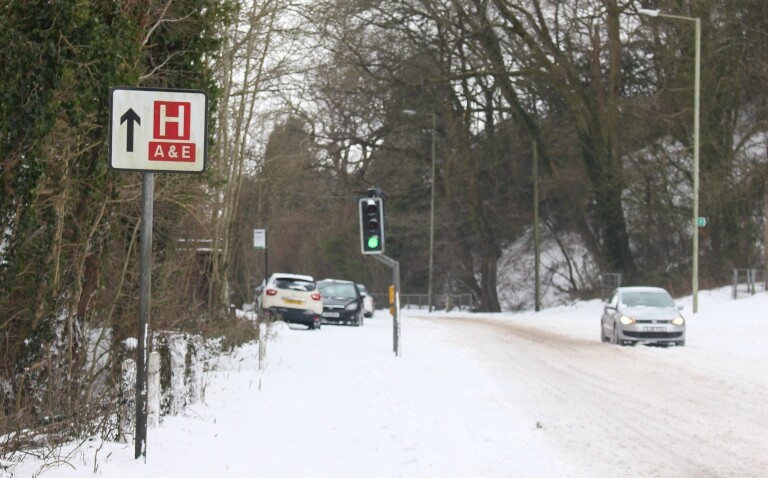
Colder days, particularly those between 0°C and 9°C, were associated with cumulative increases in inpatient admissions and outpatient appointments, especially among adults aged over 65 years.
However, emergency department (ED) attendances declined on colder days – likely reflecting barriers to accessing care – while mortality remained elevated at sub-zero temperatures, indicating barriers to seeking care in hazardous cold conditions despite persistent health risks.
In contrast, very hot days – defined as those over 23°C – produced sharp same-day increases in ED attendances, while inpatient admissions increased by an estimated 13.2% and outpatient appointments by 34.0% relative to average use. However, these effects were partially offset by subsequent short-term declines when cumulative effects were considered.
Overall, suboptimal temperatures accounted for 3.0% (95% CI 1.2–4.7) of total NHS healthcare costs, with cold exposure responsible for 64.4% of this burden, reflecting their greater frequency.
Older adults were disproportionately affected, with individuals aged 85 years or older experiencing the largest increases in hospital activity and costs during both cold and hot periods.
Exposure to average daily temperatures outside of the reference range was estimated to account for 3.0% of recorded healthcare costs, or £3bn, for NHS England. This is higher than the entire NHS dentistry spend of £2.899bn.
Anticipate and adapt to disruptions
The authors noted the relatively small number of very hot days in the dataset, limiting precision for heat-related estimates, and the focus on GP-registered populations, which excludes unregistered emergency care users. They also acknowledged restricted generalisability beyond the English NHS gatekeeper model.
Nevertheless, they concluded that the findings offer a system-wide benchmark for understanding the health burden of temperature and how its variability can disrupt healthcare delivery and exacerbate pressures on capacity during busy periods.
It underscores the urgent need for climate-resilient healthcare infrastructure, improved preparedness in secondary care and targeted protective strategies for older populations to mitigate temperature-related surges in demand.
The authors highlighted the need for further research into the long-term impacts of heat extremes as these become more frequent due to climate change. Integrating projections of climate change with demographic ageing will also be necessary as population growth and ageing will likely amplify this burden over time, they added.
Commenting on the results, Dr Patrick Fahr, senior health economist at the Nuffield Department of Primary Health Care Sciences, University of Oxford, and a lead author of the study, said: ‘Temperature affects the NHS every day, but until now nobody knew how costly this was. [The] 3% is both a small and a large figure, because these costs are concentrated on cold and hot days only when demand is spiking. Historically, the winter season has been and remains associated with additional health risks, which occur routinely each year, however heatwaves are emerging as a new challenge.
‘In the data, heat tends to be associated with short, same day increases in demand and pressure on services, requiring a rapid response. Overall, the practical implication is that planning for temperature-related variation in service use is a year-round issue. Vulnerable people, such as older adults, can be particularly at risk.’