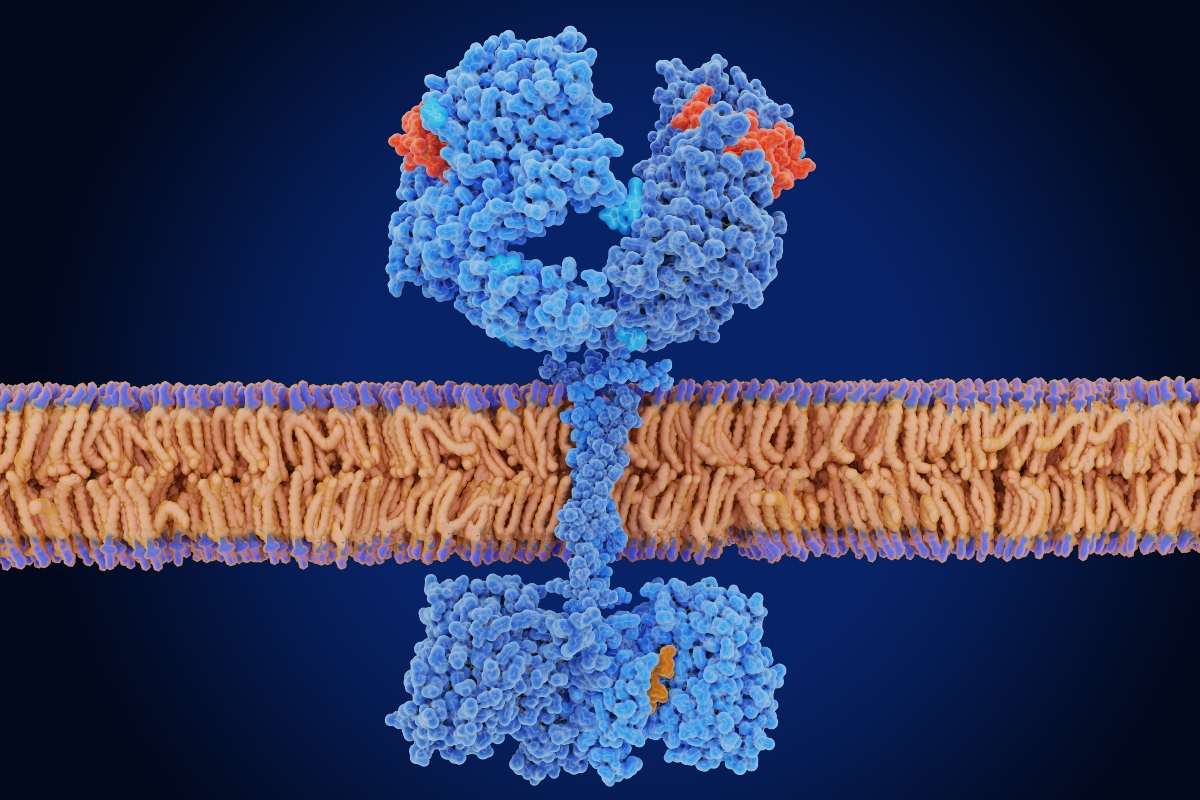
A hormone-related interleukin (IL)–epidermal growth factor receptor (EGFR) axis that underpins greater type 2 (T2) inflammation provides new insights into asthma severity in females and potential therapeutic targets in experimental research.
Led by teams from Imperial College London and published in the journal Science Immunology, the study used murine models to investigate how biological sex influences reactions to inhaled allergens starting in early life and how sex hormones, IL-33, and EGFR interact to shape T2 airway responses.
BALB/c mice were exposed to house dust mite allergen from postnatal day seven until six weeks of age. In parallel, in vitro experiments were conducted with human airway fibroblasts and bronchial epithelial cells obtained from patients with asthma.
Key immunological outcomes, including the production of T2 cytokines such as IL-4, IL-5, and IL-13, eosinophilic inflammation, serum immunoglobulin E (IgE) levels, and gene expression profiles, were examined alongside pharmacological inhibition.
Female bias in T2 inflammation driven by IL-33–EGFR
Female mice exposed to the allergen exhibited significantly stronger T2 immune responses than males, including more IL-5- and IL-13-producing CD4+ T cells, higher IL-13 levels in bronchoalveolar lavage, and elevated serum IgE. These differences were accompanied by greater eosinophilia and increased expression of T2-associated genes.
Notably, blocking EGFR signalling eliminated these sex differences, highlighting the pathway’s crucial role. The inhibition of EGFR removed several inflammatory disparities between males and females, especially in CD4+ T cell cytokine responses.
Mechanistically, IL-33 was identified as an upstream driver. Lung IL-33 levels were significantly higher in females, and IL-33 administration in male mice increased T2 responses, including higher numbers of IL-5+ and IL-13+ CD4+ T cells and increased eosinophil counts.
Further experiments showed that IL-33 directly upregulated EGFR expression on T helper 2 cells and increased cytokine production. EGFR-positive CD4+ T cells released significantly higher amounts of IL-5 and IL-13 than EGFR-negative cells, whereas blocking EGFR decreased cytokine secretion in vitro.
Role of estradiol in T2 inflammation
The study also identified a key role for the female sex hormone 17β-estradiol (E2), which increased IL-33 production in human lung fibroblasts and epithelial cells in vitro.
In vivo, E2 administration to male mice increased IL-33 expression and T2 inflammation to levels comparable to those in females, effectively eliminating sex differences.
Reliance on murine models and technical constraints in manipulating hormone levels in neonatal mice, which restricted direct causal testing, were identified by the study authors as limitations. Measuring circulating hormone levels also proved difficult due to limitations in assay sensitivities, they added.
Clinically, while EGFR inhibition reduces inflammation in experimental models, its therapeutic application is limited by adverse effects. Targeting IL-33 is recognised as a more viable strategy, with anti-IL-33 therapies demonstrating favourable safety and efficacy signals in early clinical trials.
Validating these mechanisms in humans
Nevertheless, the results support an E2–IL-33–EGFR signalling axis that increases allergic inflammation in females, which could explain worsening asthma during periods of hormonal change, such as during puberty, menopause or pregnancy.
Senior study author, Professor Clare Lloyd, head of the Division of Respiratory Sciences at the National Heart and Lung Institute, Imperial College London, said: ‘Asthma severity often changes during periods of hormonal fluctuation, but we still know relatively little about how sex hormones influence immune pathways in the lungs.
‘Our findings suggest that oestrogen can amplify allergic inflammation by acting on structural and immune cells together, which may help explain why asthma outcomes can differ between females and males.’
Future research will now focus on validating these mechanisms in humans and exploring targeted interventions that account for sex-specific disease biology.
Reference
Stölting H et al. Epidermal growth factor receptor controls sex differences in lung type 2 responses to inhaled allergen. Sci Immunol 2026;11:eadk1673.