The UK National Screening Committee (NSC) will advise against routine NHS prostate cancer screening but recognises there is evidence for screening to be considered for men with faulty BRCA genes.
The NSC said that the findings of a model of whole-population screening for prostate cancer mean that this approach is ‘not recommended’.
Using currently available tests, routine prostate cancer screening for all men is ‘very unlikely’ to be cost-effective and it is ‘not clear whether it would result in more good than harm’, the committee said.
Of the targeted screening strategies considered, the findings of the model suggest that screening for prostate cancer in men with known BRCA1/2 gene mutations is the approach ‘most likely to do more good than harm’ and the NSC will now consult on a draft recommendation for this screening strategy.
The modelling found that the most ‘cost-effective’ strategy for screening men with a confirmed BRCA1/2 gene mutation is screening every two years, from age 45 to age 61 years.
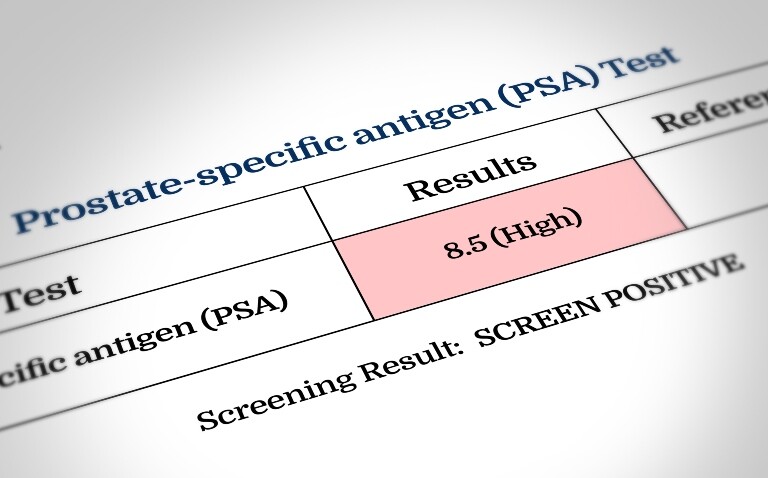
Currently, any man aged over 50 can request a prostate-specific antigen (PSA) test from their GP, but the NSC previously said it does not recommend a screening programme as the test is ‘not accurate enough to detect prostate cancer that needs treatment’.
The committee last examined the body of evidence in 2020, recommending against introducing a national screening programme as, at that time, ‘the potential harms outweighed the benefits’.
However, it came under increased pressure in recent months to reconsider PSA testing policy, particularly after Sir Chris Hoy’s announcement that he had been diagnosed with terminal cancer.
Earlier this year, there had been heightened speculation over the updated recommendations from the NSC, and the committee looked at modelling of a range of options, including a more targeted approach.
Potential impact of prostate cancer screening strategies
The committee commissioned the Sheffield Centre for Health and Related Research (SCHARR) to develop an updated 2025 prostate cancer screening modelling study.
The SCHARR report predicts the potential impact of various screening strategies, including population screening and targeted approaches aimed at high-risk groups including black men, men with a family history and men with a BRCA gene variation.
Approximately one in 300 people in the population have an alteration in one of the BRCA genes.
The NSC has now opened a 12-week public consultation to ask individuals and organisations to provide feedback on this study and on the wording of a draft recommendation based on its findings.
The committee said: ‘The model is more conclusive about the balance of benefits and harms compared to cost of screening men with a known BRCA1/2 gene mutation.
‘It is estimated that the offer to screen this group would result in less overdiagnosis compared with usual care.
‘This is because men with BRCA1/2 mutations may develop more aggressive cancers and so the benefits to screen would outweigh the harms when compared to the general population or other risk groups.’
The committee makes recommendations to ministers and the NHS across the four nations of the UK, based on an ‘assessment of high-quality, peer-reviewed evidence’ on whether screening for a certain condition would do more good than harm at reasonable cost.
BRCA testing welcomed
‘However, the five-year data from our IMPACT screening trial show that cancers are picked up each year that these men are tested in BRCA2 carriers, and in all but one of the five years in BRCA1 carriers. We therefore recommend annual screening, rather than every two years – to avoid the risk that an aggressive cancer could be allowed to grow unchecked for a whole year.’
In October, findings from the European Study of Prostate Cancer Screening suggested that PSA-based population screening results in a reduction in deaths due to prostate cancer by approximately 13%. Some experts said it was the best evidence yet to make the case for a UK screening programme, but others maintained that the problem of overdiagnosis remained a key issue.
A recent study comparing an at-home saliva test to assesses genetic risk of prostate cancer to PSA level or magnetic resonance imaging (MRI), found that the at-home saliva test was more accurate at detecting clinically significant disease.
And last year, a randomised trial found that a biomarker-based strategy is comparable to an MRI-enhanced approach for prostate cancer screening but resulted in more biopsies and increased detection of less aggressive cancers.
A version of this article was originally published by our sister publication Pulse.