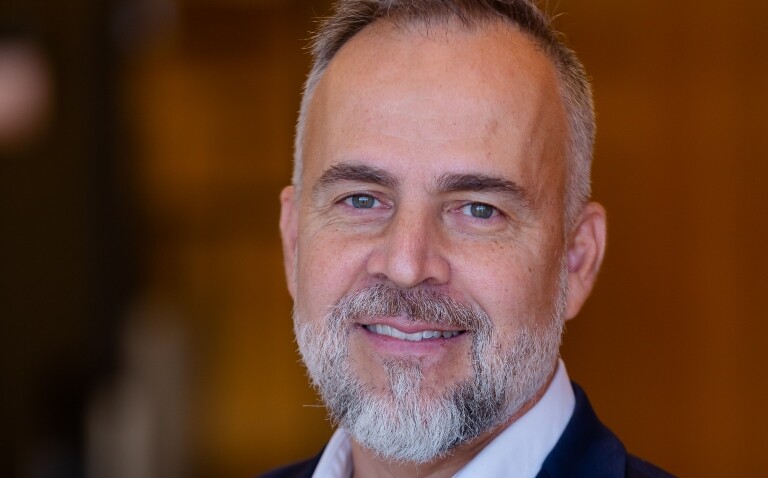
As a sector under strain and awaiting long-overdue reform, the future of emergency medicine requires a collaborative effort to modernise and optimise patient care. Helen Quinn talks to EUSEM president Dr Robert Leach about the state of emergency care in Europe, the beacons of hope and the priorities and plans for navigating emergency medicine through these turbulent times.
Emergency medicine in Europe stands at a critical inflexion point. As a relatively young speciality, only formally recognised in most European countries in recent decades, emergency medicine is confronting a landscape of unchartered challenges. Emergency departments throughout the continent are struggling to cope with ageing populations, increasing mental health needs, staff burnout and new healthcare demands.
The daily functioning of emergency departments has changed little over the last 50 years, despite significant shifts that have left other aspects of society comparatively unrecognisable. Dr Robert Leach, president of the European Society for Emergency Medicine (EUSEM), says the speciality must quickly catch up in order to evolve in step with today’s societal expectations and needs.
‘I am convinced that we are at a threshold,’ he says. ‘The actual functioning of emergency medicine is no longer sustainable in tomorrow’s society.’
Dr Leach emphasises the urgency for emergency clinicians to actively participate in shaping the future of the speciality. ‘I do not believe it’s enough for us to passively allow our governments and the authorities within our health systems to decide for us. We must stand up and determine for ourselves how we want our speciality to adapt and to function in the future.’
Having led emergency departments in Belgium for over 15 years, including overseeing his hospital’s emergency response to the 2016 terror attack in Brussels, Dr Leach is currently head of the emergency department and the mobile emergency and resuscitation service at Centre Hospitalier de Wallonie picarde in Tournai.
Reflecting on his route into emergency medicine, he fondly recalls a close colleague of his saying: ‘I didn’t choose emergency medicine. Emergency medicine chose me.’ Dr Leach’s national and international advisory roles, as well as his EUSEM presidency, which he took up in October 2024, reflect his commitment to shaping healthcare policy, aligning emergency provision throughout Europe, and ultimately improving patient care.
‘I really couldn’t see myself doing anything else,’ he says. ‘Even if I wanted to choose something else, I would probably somehow find myself back in emergency medicine.’
Harmonisation of emergency medicine across Europe
Described by Dr Leach as ‘dynamic and young’, as well as ‘significantly challenged’, emergency medicine is now formally recognised in most European countries as a European-, national- or supra-speciality. Cyprus appears to be the last post of resistance, he says.
The formal recognition of emergency medicine alongside other established medical specialities is a significant achievement, realised through close collaboration between EUSEM and national healthcare authorities. ‘Within a speciality comes a harmonisation in the training,’ says Dr Leach. ‘And when you have harmonised, quality training, you will, by definition, have quality care, which is the vision of EUSEM.’
Further work is required for all nations to adopt the universal European Training Requirements. The road remains long, and workforce challenges and shortages, as well as healthcare system insufficiencies, make this even more challenging. But by coming together as a speciality, Dr Leach believes emergency medicine can evolve and adapt more effectively to current and future challenges.
Patient needs and challenges in emergency medicine
Emergency healthcare professionals work in high-demand, high-pressure environments and are exposed to suffering and death daily. Within this context, resources can often be scarce, administrative obligations are increasing, and adequate assistance for patients’ needs is not always readily available, all negatively impacting staff wellbeing.
‘In the emergency department, we cannot turn away people. We treat everyone, or at least we attend to everyone,’ Dr Leach says. ‘Our situation is quite different from that of a traditional consultation; the emergency departments are never closed and when we are full, we are still open.’
There is a need for timely, quality care, says Dr Leach, with a greater emphasis on effective continuity of care. Doctors in emergency medicine are seeing a much higher demand for emergency mental health services as patients in crisis often have nowhere else to go.
The increasingly aged population across Europe, which has its own specific needs; rising levels of substance abuse; increasing levels of violence seen in the emergency room; and complex issues related to pain management in healthcare all add to the daily challenges.
‘There is that frustration in the system where you think, this patient needs this type of care, but there’s no alternative, for instance, patients that require any sort of social assistance. On weekends, most of the community services are closed, so there is this gap,’ says Dr Leach.
‘It sometimes appears as if we care are constantly confronted by the same problems and the same challenges. It’s like Sisyphus pushing the stone up to the top of the hill, it just keeps rolling back down and we continue to keep pushing it back up.’
The lack of financial resources available to compensate emergency medicine professionals also contributes to widespread frustration, disillusionment and burnout among staff working in underfunded departments.
‘The pay is not really in accordance with all of the challenges and responsibilities that one must deal with daily,’ he adds. ‘It’s a difficult profession, and whereas a fair salary is important, I also support a fully integrated support programme for burnout prevention.’
Opportunities and digital health support
To meet the demands of a rapidly evolving world and shifting societal needs, Dr Leach believes that emergency medicine requires additional support. He sees significant opportunities in digital health solutions, particularly in the areas of artificial intelligence (AI) and telemedicine.
‘We are not going to be able to very easily modify healthcare systems. They are developed and have evolved within the control constraints that are inherent in government systems, which are not the same throughout Europe,’ he says.
However, he believes improvements are possible within the current framework, with the addition of technological advancements. ‘I will always talk about AI support. It cannot be the solution, it has to be a support,’ he cautions.
AI is currently used in emergency departments for triage and as a symptom checker, helping to identify time-sensitive pathologies and conduct predictive analyses for conditions such as sepsis, which can be critical in busy emergency environments where overlooked symptoms could be life-threatening.
Telemedicine is also becoming increasingly valuable, helping to reach more people, especially those in remote populations outside urban centres.
As the world changes, there is a growing requirement to address the needs of vulnerable populations, including migrants and socioeconomically disadvantaged individuals. Dr Leach describes how climate change is also bringing new and unexpected health threats to emergency medicine, as well as underlining the necessity to be better prepared for pandemics, terror attacks, natural disasters and armed conflict.
‘A brand-new priority, which has become number one on my list, is European preparedness,’ Dr Leach says. ‘Are our departments, our hospitals modifiable for mass casualty management in the event of a natural disaster, floods, wildfires, earthquakes or armed conflict? Are we preparing?’
On this subject, he is meeting with the World Health Organization, the EU and NATO, working to ensure that emergency departments across Europe are prepared and unite to collaboratively face potential future threats.
Presidency goals and priorities
As president of EUSEM, Dr Leach is in a position to support clinicians as emergency departments navigate our changing world and ensure that society stands alongside the advocates leading change on the frontlines. After 30 years of EUSEM campaigning to have emergency medicine recognised as a speciality, Dr Leach says it is time to ‘step into the next stage’.
Alongside the expansion of collaborations around the world, and the advancement of research to support optimum patient care, Dr Leach is keen to engage with EUSEM members and the wider emergency medicine workforce. ‘I want to know what they need, and I want to be able to give them what they need,’ he says.
‘I have an enormous duty, and maybe it is even a bigger privilege, to be able to guide the Society so that emergency medicine has the place that it should have within healthcare systems because if emergency medicine fails, the fear is that healthcare systems will also fail.’
At the heart of his message lies a clear ambition: to strengthen the profession by making it more appealing to new talent, supporting those already within it, and ultimately ensuring its long-term vitality by making emergency medicine ready for whatever the future brings. ‘It’s maybe not easy,’ he acknowledges, ‘but it’s a great profession, and it’s for us to make it even more attractive.’