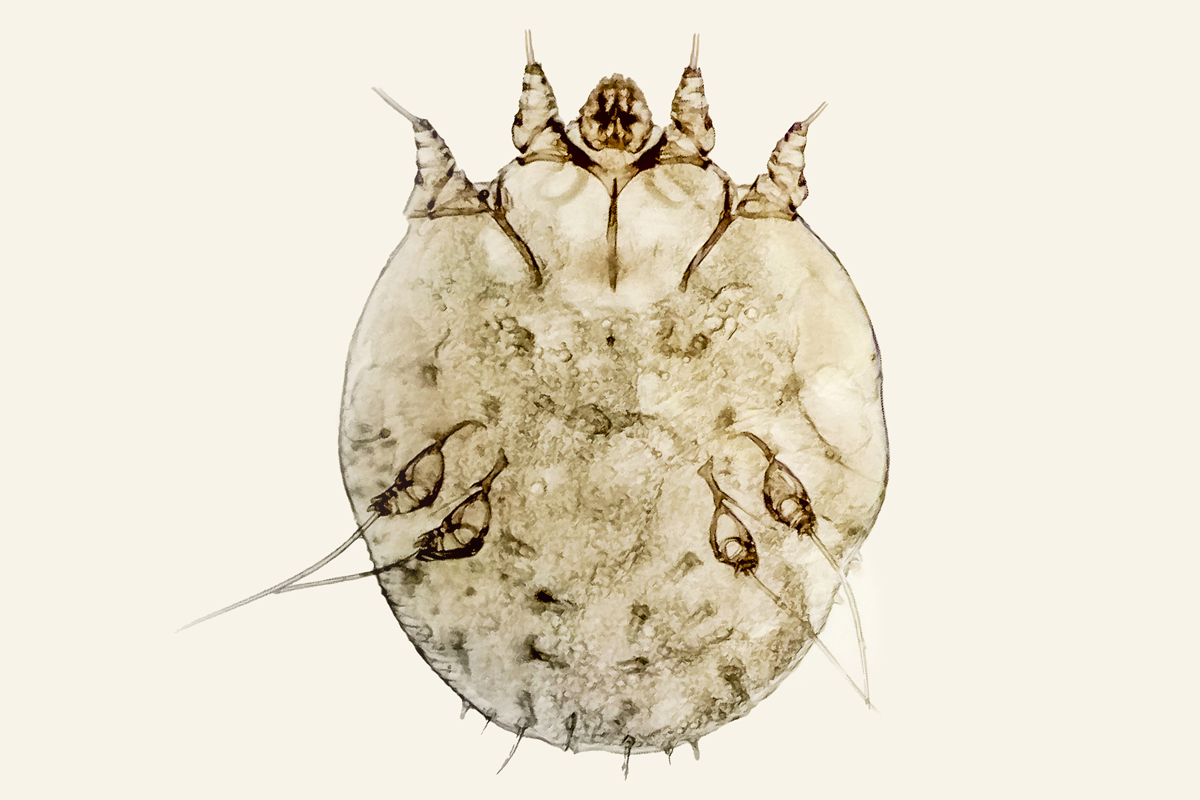
Increasing the dose of oral ivermectin, when combined with topical permethrin, does not improve cure rates in adults with severe scabies, a new trial has found, supporting the continued use of the current standard regimen.
Severe scabies, which includes crusted and profuse forms of the disease, is a rare but potentially life-threatening parasitic skin disease associated with significant morbidity, mortality and public health consequences.
Although treatment usually involves oral ivermectin alongside topical scabicides, clinical trial evidence remains limited, and the optimal ivermectin dose has not been definitively established.
The GALE CRUSTED trial, published in the New England Journal of Medicine, investigated whether a higher dose of ivermectin could improve outcomes in adults with severe scabies.
The blinded, randomised trial was conducted across 33 dermatology departments in France and enrolled adults with profuse or crusted scabies confirmed by parasitological or dermoscopic assessment.
Participants were randomised to receive oral ivermectin at either 400 μg/kg or the standard 200 μg/kg dose on days 0, 7 and 14. All patients also received a head-to-toe application of 5% permethrin cream on days 0 and 7, along with daily emollient therapy.
Higher ivermectin dose and cure rates
A total of 133 patients, with a median age of 67 years, underwent randomisation, with 132 included in the main analysis. Nearly 60% required hospitalisation and 42% had neurological or cognitive impairment.
Profuse scabies alone was present in 59% of patients, crusted scabies alone in 5%, and both forms in 36%.
The primary endpoint was the cure of severe scabies, defined by the absence of mites and mite-related products on parasitological or dermoscopic assessment on days 18 and 21, together with the absence of active clinical lesions on day 28. The secondary endpoint was the incidence of adverse events.
Cure rates were 75% for patients receiving the higher-dose ivermectin and 82% for those on the standard dose, with no significant difference between the groups. Sensitivity and subgroup analyses produced similar results.
According to the authors, the results indicated that increasing the ivermectin dose does not improve the likelihood of a cure when combined with topical permethrin and emollient therapy.
Standard treatment regimen remains supported
No new safety concerns were identified during the trial. Serious adverse events occurred in three patients receiving higher-dose ivermectin and in five receiving the standard dose, while treatment-related cutaneous adverse events occurred at similar rates in both groups.
Several limitations were noted by the authors, including the absence of patients with very severe crusted scabies, non-standardised diagnostic procedures, incomplete assessment data for some patients and the lack of long-term follow-up. The study was also conducted exclusively in France, where permethrin resistance is believed to be low, they added.
However, the overall findings support the continued use of oral ivermectin 200 μg/kg on days 0, 7, and 14, in combination with 5% permethrin cream and emollient therapy, for severe scabies.
The authors suggested that future research should explore alternative strategies to improve cure rates beyond the approximately 82% achieved with the current regimen, including prolonged ivermectin administration, more intensive topical treatment, alternative scabicides and moxidectin.
Reference
Bernigaud C et al. Combined oral ivermectin and 5% permethrin cream to treat severe scabies. N Engl J Med 2026;394:1814–23.