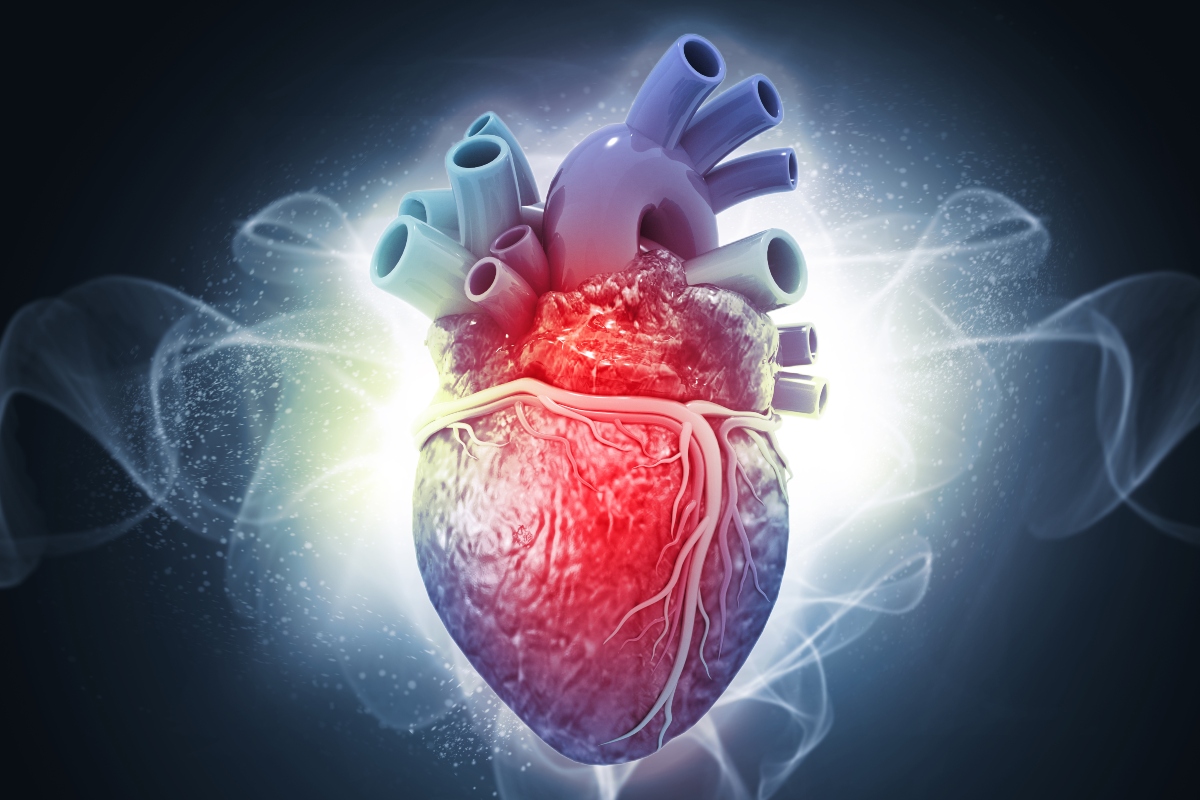
Professor Colin Berry describes how British Heart Foundation-funded research into stress cardiac magnetic resonance-based myocardial blood flow endotyping can reclassify diagnosis in more than half of patients with chest pain and unobstructed coronary arteries, potentially leading to targeted therapy and significant improvements in angina and quality of life.
Chest pain is one of the most common reasons for presentation to both primary and secondary care. A coronary angiogram is recommended for patients with a high likelihood of coronary heart disease, yet many patients undergoing this procedure to investigate chest pain are found not to have obstructed arteries.
Although atherosclerosis is frequently present in people referred for an invasive angiogram, it often causes minimal or moderate narrowing of the main coronary arteries.
In contemporary practice, most of these individuals do not undergo functional diagnostic tests – such as assessment of coronary flow reserve (CFR) or measurement of coronary microvascular function using the index of microcirculatory resistance (IMR) – often leaving the underlying cause of the chest pain uncertain.
When CFR or IMR is increased, the diagnosis is microvascular angina. Without targeted assessment of small-vessel function, this diagnosis might be missed, leaving people with a treatable cause of angina without appropriate indicated therapy. The consequences can lead to chronic symptoms that affect family, social and professional functions in daily life, as well as repeated episodes of healthcare.
The CorCMR trial: evaluating chest pain causes
Advances in cardiac magnetic resonance (CMR) imaging now allow myocardial blood flow to be localised and quantified. Because angina results from a relative decrease in myocardial perfusion, CMR can facilitate the detection of abnormal flow, refine diagnosis and help tailor treatments to better alleviate symptoms.
Stress CMR is a non-invasive test that assesses myocardial ischaemia, viability and cardiac function without ionising radiation.
The Coronary Microvascular Angina CMR (CorCMR) trial was a prospective, multicentre cohort study that evaluated the cause of chest pain using stress CMR imaging of myocardial blood flow, embedded within a nested 1:1 randomised, controlled, double-blind superiority design.
The study was conducted across three Scottish health boards in west and central Scotland, serving a combined population of approximately 2.5 million people.
Research ethics committee approval was granted on 11 January 2021, followed by NHS management approval from each participating site: NHS Golden Jubilee University Hospital, University Hospital Hairmyres and University Hospital Ayr.
Chest pain trial design
CorCMR builds on results from the landmark CORonary MICrovascular Angina (CorMicA) trial, which was conducted at NHS Golden Jubilee during 2017/18 and followed patients referred for angiograms due to stable chest pain.
Traditionally, when no obstructive disease was found through angiography, patients were discharged with a diagnosis of non-cardiac chest pain. CorMicA introduced additional tests during the angiogram to assess small-vessel function and revealed that many patients, particularly women, had microvascular angina – a condition previously undetectable by standard imaging.
Participants in CorCMR had undergone invasive coronary angiography within the preceding three months, with no evidence of obstructive coronary artery disease (CAD).
The indication for invasive coronary angiography was suspected angina, and symptoms were assessed at baseline using the Rose angina questionnaire and categorised as typical, atypical, or non-anginal.
The study was led by cardiology registrar Dr Conor Bradley, with support from research nurses in each hospital and NHS radiographers at the Golden Jubilee University Hospital. Between 9 February 2021 and 18 August 2023, some 273 eligible outpatients were screened and provided written informed consent within three months of the angiogram.
Of the eligible patients, 250 attended for CMR imaging and were randomised before the scan. Their mean age was 63.3 years and 50.4% were female.
A pixel-wise MRI mapping technique was used to measure myocardial blood flow. This method is currently being finalised by imaging vendors for commercial availability. Once implemented, hospitals will be able to assess patients using the same approach as employed in this study.
Alternative imaging methods could be considered, including stress nuclear imaging by single-photon emission tomography or positron emission tomography.
Primary and secondary outcomes met
The primary outcome of the diagnostic study, defined as the reclassification of the initial diagnosis based on the angiogram, occurred in 131 patients (53.0%, 95% CI 46.6%–59.3%; p<0.001), indicating that the primary diagnostic outcome was met.
The primary outcome of the randomised trial was the Seattle Angina Questionnaire summary score at 12 months after randomisation. The mean ± standard deviation scores in the intervention and control groups were 70.9 ± 23.6 (change from baseline 21.7 ± 22.6) and 52.1 ± 24.1 (change from baseline -0.8 ± 20.4), giving an adjusted mean difference of 20.9 (95% CI 15.8–26.0), respectively. This confirmed that the primary outcome of the randomised trial was met.
Improvements were also observed in the prespecified secondary outcome of health-related quality of life measured by the EuroQol 5-Dimension 5-Level questionnaire at 12 months (adjusted mean difference 0.09, 95% CI 0.04–0.13).
In patients with chest pain and unobstructed coronary arteries, endotyping-informed therapy revised the diagnosis in more than half of the participants and led to improvements in angina and health-related quality of life.
Implications for chest pain in clinical practice
Our study identified that half of this outpatient population with chest pain had evidence of coronary microvascular dysfunction, with moderately high angina severity. The result aligns with previous studies conducted by our research group1,2 and others.
Many patients with undiagnosed angina without obstructive CAD repeatedly attend emergency departments with chest pain, and many of these people are women.
From a clinical perspective, if a patient presents with suspected angina and the angiogram rules out obstructive CAD, then, in my opinion, functional tests should be offered to guide onward management.
More diagnostic options are needed to reflect the differing test availability across healthcare providers and to identify more disease-specific therapies.
Stress nuclear imaging offers diagnostic value comparable to that of stress CMR. Also, healthcare providers may wish to reflect on the widespread use of non-invasive and invasive angiography.
Approximately 80% of people undergoing cardiac computed tomography and half of people undergoing invasive angiography do not have obstructive CAD. Alternative diagnostic approaches may therefore be appropriate and could offer resource savings for the health service.
However, all tests have limitations, and clinicians should carefully consider their individual patients and the validity of the test undertaken. Usually, the patient is the most reliable indicator. Therefore, clinicians should listen and act accordingly. If the symptoms are mild and not troubling, discharge with reassurance might be reasonable. However, if the symptoms are troubling and impact lifestyle and wellbeing, further management should be undertaken.
Healthcare professionals should also be aware of the services available to them. Collaborating with colleagues through meetings, departmental presentations and continuing education is a good approach to fostering valuable multidisciplinary teamwork.
Commonly, emergency, cardiology and primary care departments work in isolation, so regional care networks could help improve links between services to facilitate appropriate referrals for patients with persistent symptoms and unmet needs.
Conclusion
Results from the CorCMR trial indicate that stress CMR-guided management significantly improves the diagnosis and treatment of angina in patients with chest pain and no obstructive CAD.
Compared with relying on angiography alone, incorporating stress CMR findings led to more accurate identification of microvascular angina, greater symptom improvement and better quality of life at 12-month follow-up.
The study also highlights that small-vessel disease is common and frequently missed in standard care, particularly in women, underscoring the value of functional blood-flow assessment in this population.
Future research is needed to confirm these findings across diverse clinical settings and evaluate long-term outcomes.
The CorCMR study was funded by the British Heart Foundation (PG/19/28/34310) and supported by the Chief Scientist Office of the Scottish Government.
Author
Colin Berry BSc MBBS PhD
Professor of cardiology and imaging, University of Glasgow, and director of research, NHS Golden Jubilee Hospital, Scotland, UK
References
- Ford TJ et al. Stratified Medical Therapy Using Invasive Coronary Function Testing in Angina: The CorMicA Trial. J Am Coll Cardiol 2018;72(23 Pt A):2841–55.
- Sidik NP et al. Invasive Endotyping in Patients With Angina and No Obstructive Coronary Artery Disease: A Randomized Controlled Trial. Circulation 2024;149(1):7–23.