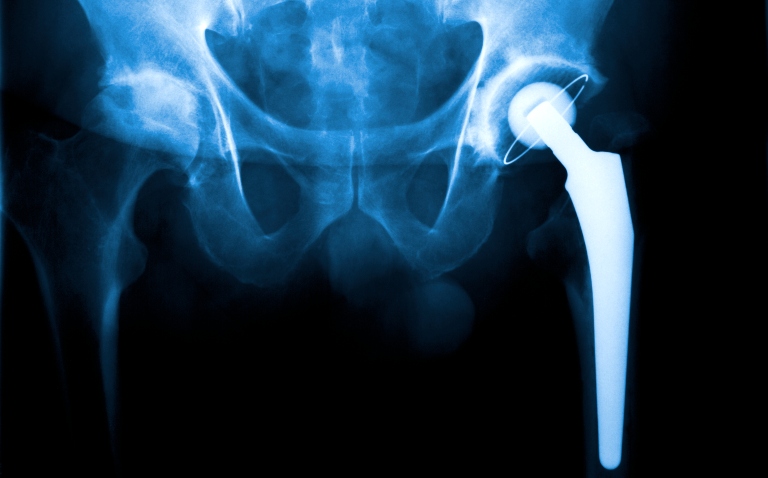
Patients from more deprived areas are more likely to have complications after having a hip replacement for osteoarthritis, according to more than a decade of NHS data.
Evaluation of National Joint Registry data of almost 450,000 patients who had a total hip replacement, showed those from the most deprived areas were more likely to experience complications, be readmitted to hospital or need another operation.
There were also differences related to patient reported wellbeing after surgery in terms of pain and function.
But after five years there was no difference by deprivation level for hip replacement revision rates, the researchers reported in the journal PLOS Medicine.
All patients gained equally in terms of patient-reported outcomes, albeit from different starting points, when they had the hip replacement, the researchers noted.
Osteoarthritis hip replacements on the rise
Overall the average age of those having a hip replacement was 70 years and 61% were women, the figures showed, with more than half categorised as overweight or obese.
The annual number of patients having a hip replacement doubled over the decade analysed.
By 2017, the NHS was doing almost 50,000 operations a year with 24% in the least deprived group and 13% in the most deprived. However, those in the most deprived group were less likely to have complete data for patient reported outcome measures.
Overall, 0.4% of patients died within 90 days of their surgery, with a higher mortality in the most deprived group, the analysis showed.
In the six months after the operation, complications occurred in 5.7% of those from the most deprived areas compared with 4.3% in the least deprived – an increased relative risk of 26%.
Existing evidence suggests that those in the most deprived groups tend to have greater numbers of comorbidities and be at a later stage of the disease progression before having joint replacement surgery.
Those in the most deprived groups may not be selected for surgery or be selected later, the researchers said, concluding that the data provides information for shared decision-making between patients and clinicians when deciding to undergo hip replacement.
Access issues for patients in deprived areas
Speaking to our sister publication Pulse, study lead Professor Andy Judge, professor of translational statistics at Bristol Medical School, said: ‘We know that patients in deprived areas have the greatest need for hip replacement surgery, they have the worst pain and function, and this study shows again they are least likely to get access and when they do they have slightly worse outcomes.’
He added that those in the more deprived groups tended to present later to their GP, which delays referral and the surgery, and lengthy waiting lists means improving access for patients from deprived areas can be challenging.
‘Because of that worse baseline point, it’s not surprising they have slightly worse outcomes. But even despite that they are still getting massive benefits from this surgery,’ he said, noting that it was important to remember that complications only impacted a small proportion of patients.
Nevertheless, counselling patients on the risks of complications following hip replacement surgery for osteoarthritis is important and Professor Judge added that there are things that can be done prior to surgery, such as prehabilitation and specific exercises, to prepare patients, which could lead to better outcomes.
A version of this article was originally published by our sister publication Pulse.