The need to improve the diagnosis and treatment adherence of obstructive sleep apnoea (OSA) in routine practice has been highlighted in a large population-based analysis of its current clinical and economic burden.
The study, led by researchers from University College London, in collaboration with institutions including Stanford University and RAND Europe, sought to quantify both the scale of OSA in working-age populations and its associated economic impact using a productivity-based modelling approach.
Published in BMJ Thorax, the analysis used data from electronically conducted interviews in November 2021, based on samples representative of national populations.
A total of 3,523 participants from the USA and 840 from the UK were included after exclusions for incomplete data. Participants were drawn from the non-institutionalised adult population aged 18 years or older.
OSA syndrome was defined using self-reported symptoms of breathing pauses during sleep and excessive daytime sleepiness occurring on at least three nights, which aligns with established diagnostic criteria.
OSA prevalence and productivity losses
The estimated prevalence of OSA syndrome was almost one in four (22.8%) in the USA and one in five (19.5%) in the UK.
Among individuals aged 18–64 years, nearly 30% of the US workforce and 7% of the UK workforce met the study criteria.
Using a computable general equilibrium model, the authors estimated total annual productivity losses of $180.2bn in the USA and £4.22bn in the UK, equivalent to 0.2% of UK GDP.
On an individual level, annual productivity losses were $3,727.40 per affected worker in the USA and approximately £1,840 in the UK.
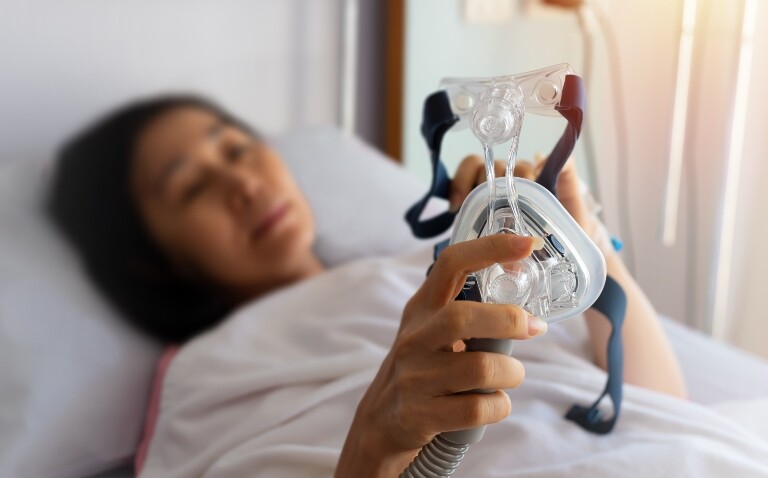
In both countries, these losses exceeded the estimated annual costs of continuous positive airway pressure (CPAP) therapy – the standard treatment.
The study was led by Professor Matt Lechner, professor of rhinology and head & neck cancer and honorary consultant rhinologist and ENT surgeon at University College London, UK. Commenting on the results, he said: ‘Early identification and treatment of OSA, combined with proactive follow-up, could deliver substantial savings – potentially amounting to billions of dollars in the US and billions of pounds in the UK each year through improved productivity alone.’
Underestimation of the total burden
The authors noted several limitations, including the reliance on self-reported proxy measures rather than objective clinical assessments such as the apnoea–hypopnoea index, which may have introduced recall bias and misclassification.
And as the analysis did not account for broader societal costs, such as healthcare utilisation, accidents or mortality risks, this likely resulted in an underestimation of the total burden and therefore a need to reassess clinical and policy priorities for OSA.
The authors added that substantial economic benefits are ‘unlikely to be fully realised without addressing the widespread issue of poor CPAP adherence’.
Indeed, they emphasised that earlier follow-up, enhanced patient education and targeted public health strategies would be necessary to improve treatment access, uptake and sustained adherence.
The implementation of screening programmes and addressing barriers to long-term management, were suggested as ways to achieve this and reduce the health and economic consequences of OSA at scale.
Professor Lechner added: ‘The burden of obstructive sleep apnoea syndrome and its economic impact have been consistently underestimated in recent years.
‘We are urging policymakers to prioritise investment in effective screening strategies, alongside targeted public health campaigns and supportive policies.’
Reference
Rehman U et al. Neglected burden of obstructive sleep apnoea: a workplace productivity loss in the USA and UK. Thorax 2026;Feb 24:thorax-2025-223550.