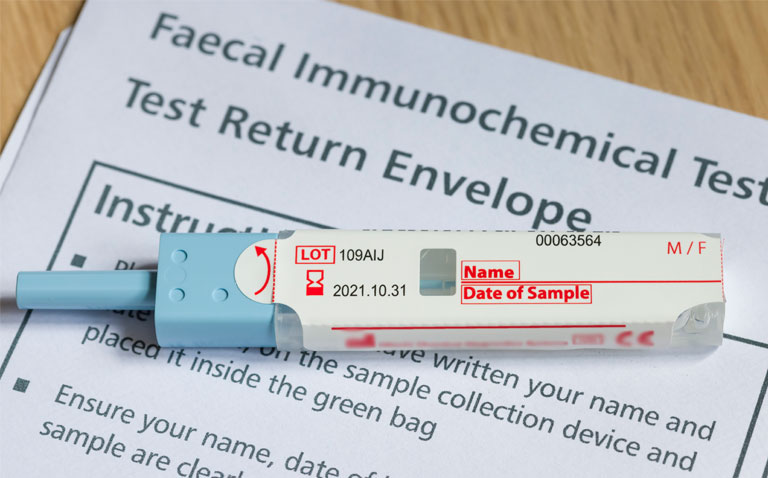
The level at which traces of blood in a faecal immunochemical test (FIT) trigger further investigation for bowel cancer is being reduced, NHS England has announced.
By lowering the threshold for urgent cancer testing from 120 micrograms of blood per gram of faeces down to 80, the NHS will offer 35% more screening colonoscopies each year to help diagnose or rule out bowel cancer, NHS England said.
It is estimated that the change, which will start to be implemented from February, could help detect around 600 more bowel cancers early each year in England and find 2,000 more people with high-risk polyps in their bowel.
In line with recommendations by the UK National Screening Committee, the NHS will now roll out the lower threshold across the country by March 2028.
The rollout follows a pilot at eight early-adopting services, with over 60 additional cancers and nearly 500 high-risk polyps being found and treated.
‘A better early-warning system for bowel cancer’
NHS England’s clinical director for cancer Peter Johnson said: ‘This is a major step forward in bowel cancer detection and will help save hundreds more lives from this devastating disease.
‘Testing at a lower threshold will now provide a better early-warning system for bowel cancer, helping us to spot and treat cancers earlier, often picking up problems before symptoms appear.
‘Earlier detection can mean less intensive treatment and ensures the best chance of survival, and in many cases people could avoid facing cancer altogether by having dangerous polyps removed before they cause harm.’
Cancer Research UK chief executive Michelle Mitchell added: ‘This vital step from NHS England to lower the threshold for further tests after bowel screening will save lives. It means more cancers will be detected at an earlier stage, when treatment is more likely to be successful, while also preventing some from developing in the first place.
‘Screening is for people without symptoms, so if anyone spots something that isn’t right for them, they should speak to their GP. It probably won’t be cancer, but if it is, finding it early can make a real difference.’
In 2023, it was found that NHS screening had reduced the incidence of cancer in the lower bowel in England by roughly 15%.
And last year, research showed that individuals with chronic conditions are more inclined to attribute bowel habit changes to medication side effects rather than suspecting colorectal cancer despite it being a red flag.
The researchers noted that while screening practices and early diagnosis have improved, many colorectal cancer cases are diagnosed at an advanced stage, highlighting that symptoms can be challenging to recognise.
A version of this article was originally published by our sister publication Pulse.