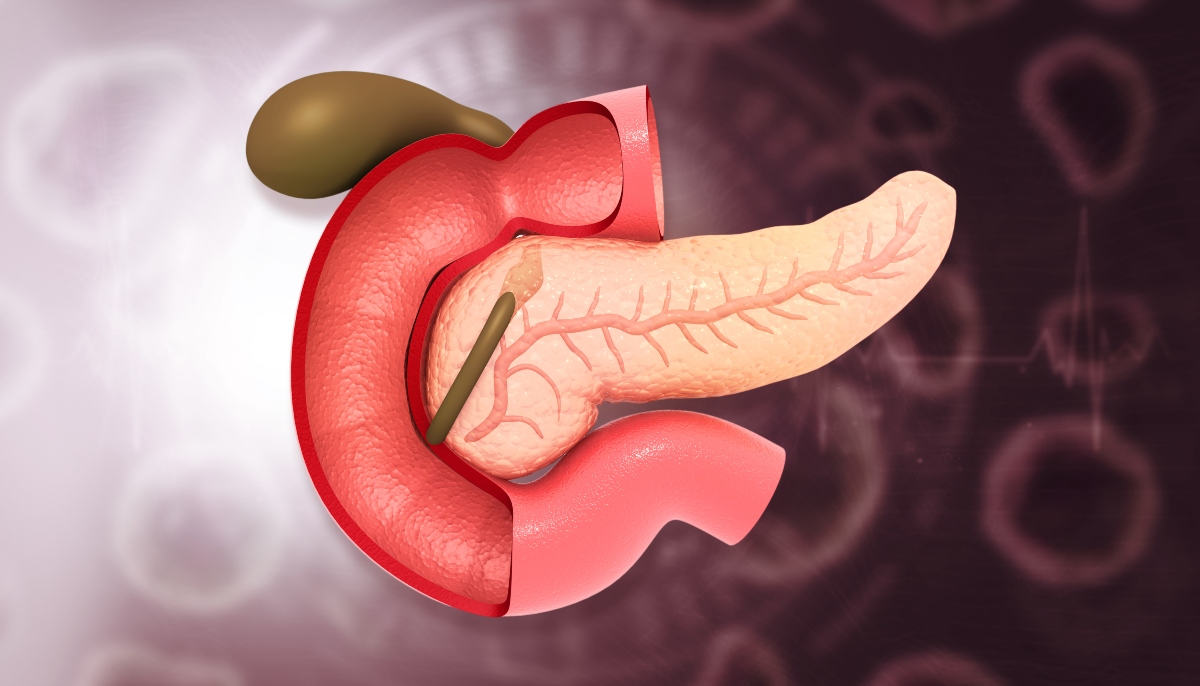
Adding early enteral nutrition to oral intake reduces the burden of complications in nutritionally at-risk patients undergoing pancreatoduodenectomy (Whipple procedure), according to the findings of the recent trial.
Optimising postoperative nutrition remains a key challenge following pancreatoduodenectomy, which is associated with high morbidity rates of 50–70%. Oral nutrition is recommended in enhanced recovery protocols, but questions remain over how useful this approach is for patients at nutritional risk after this surgery.
To explore this, the multicentre, open-label NUTRIWHI trial, published in the journal JAMA Surgery, evaluated whether early enteral nutrition in addition to oral intake improved postoperative outcomes compared with oral nutrition alone.
NUTRIWHI was conducted across three tertiary centres in Switzerland and France, enrolling 144 patients undergoing pancreatoduodenectomy who were at increased nutritional risk, identified via a nutritional risk screening score of 3 or more.
Of these patients, 142 were randomised 1:1 to receive either early enteral nutrition plus oral intake or oral nutrition alone. After exclusions and dropouts, 118 patients were included in the final analysis.
The primary outcome was postoperative morbidity at 90 days, assessed using the Comprehensive Complication Index (CCI). Secondary outcomes included overall, minor and major complications; mortality; delayed gastric emptying; pancreatic fistula; haemorrhage; infections; pulmonary complications; length of stay; and readmission.
Early enteral nutrition and pancreatoduodenectomy complications
Patients receiving early enteral nutrition had a significantly lower mean 90-day CCI compared with those receiving oral nutrition alone (25.5 vs 35.8; mean difference 10.3; 95% CI 1.8–18.8; P=0.02), indicating a reduced overall burden of complications.
Morbidity rates were 76% in the enteral group compared with 86% in the oral group, although this difference was not statistically significant.
Rates of major complications were lower in the enteral group (27% vs 44%) but did not reach statistical significance (risk ratio [RR] 1.62; P=0.06). Notably, infectious complications (20% vs 37%; RR 1.83; P=0.04) and pulmonary complications (5% vs 19%; RR 3.66; P=0.02) were significantly less frequent.
No significant differences were observed for delayed gastric emptying, pancreatic fistula, haemorrhage or surgical site infection.
Enteral nutrition for pancreatoduodenectomy was generally well tolerated, although 24% of patients required nasojejunal tube replacement due to accidental removal. Around half of patients in both groups required supplementary parenteral nutrition, and the time to achieve 50% of caloric requirements did not differ significantly.
Subgroup analyses suggested that the benefit of early enteral nutrition may be more pronounced in older patients, those with diabetes, those undergoing preoperative biliary drainage, and those with higher NRS scores. However, these findings were exploratory and not powered to draw definitive conclusions.
Limitations and clinical implications
The authors acknowledged several limitations, including a 17% dropout rate, the relatively small sample size and potential centre-related variability, as most patients were recruited from a single site.
The open-label design may also have introduced bias, while heterogeneity in surgical indications and the high use of parenteral nutrition may have limited generalisability.
Despite this, the findings suggested that early supplemental enteral nutrition may reduce postoperative morbidity in patients at nutritional risk undergoing pancreatoduodenectomy.
Further research to define optimal perioperative nutritional strategies, including identifying which patients benefit most and the best methods of enteral delivery, is needed, the authors concluded.
Reference
Joliat G-R et al. Early enteral vs oral postoperative nutrition after pancreatoduodenectomy: the NUTRIWHI randomized clinical trial. JAMA Surg 2026; Apr 22:doi: 100.1001/jamasurg.2026.1048.