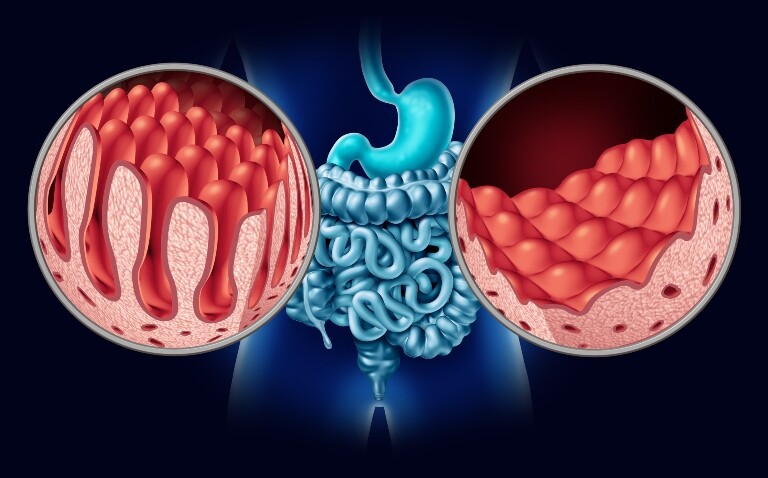
Artificial intelligence is matching and, in some cases, surpassing human expertise in diagnosing coeliac disease from biopsy samples. Dr Florian Jaeckle discusses how his team’s research shows that machine learning models can enhance pathologists' accuracy while providing interpretable insights into key histological features, setting the stage for faster, more reliable diagnoses.
Coeliac disease affects more than one in 100 people, yet most remain undiagnosed.1 This autoimmune disorder is triggered by gluten and its ingestion causes the immune system to attack the lining of the small intestine, leading to symptoms including diarrhoea, weight loss, anaemia, fatigue, dermatitis herpetiformis and infertility.2
The global prevalence of coeliac disease is approximately 1%, with biopsy-confirmed prevalence of 0.4–0.5% in South America and Africa, 0.4–0.8% in Europe and around 0.6% in both North America and Asia.3
If left untreated, coeliac disease can increase the risk of serious complications, including duodenal adenocarcinoma and lymphoma.4 The only effective treatment is strict lifelong adherence to a gluten-free diet.
Timely and reliable coeliac disease diagnosis
Although common and potentially serious, coeliac disease is often diagnosed late. While current guidelines recommend initial serological testing, unless antibody levels are very high, patients require a duodenal biopsy, which is considered the gold standard.
Pathologists assess features such as villous atrophy, crypt hyperplasia and an increased ratio of intra-epithelial lymphocytes (IELs) to enterocytes. However, interpretation can vary widely.
We undertook a large-scale study in 2024, analysing the concordance in histological examination of duodenal biopsies in digitised whole-slide images.5
A total of 13 pathologists reviewed the same 100 duodenal biopsies. Pairwise agreement was 73% when only biopsy slides were available, rising to 80% when combined with serological data for immunoglobulin A tissue transglutaminase and haemoglobin.5 This level of variability underscores how challenging consistent diagnosis can be and how much patients stand to gain from more reliable tools.
An AI algorithm to support diagnosis
To address this challenge, we developed an AI algorithm capable of diagnosing coeliac disease directly from duodenal biopsy images.
In a multicentre study published in the New England Journal of Medicine AI, we trained and validated the model on a diverse dataset of over 3,000 haematoxylin- and eosin-stained whole-slide images of duodenal biopsies alongside their clinical diagnoses collected across five hospitals using different scanners.6
When tested on an independent dataset of nearly 650 images from a previously unseen source, the AI achieved outstanding results, with an accuracy of more than 97%, a sensitivity of 95% and a specificity of 98%.
Importantly, when specialist pathologists reviewed the slides, they were just as likely to agree with the AI’s assessment as with that of another colleague. This demonstrates that AI can perform at a level comparable to that of experienced specialists, and crucially, it can do so consistently across diverse settings.
Making AI interpretable for pathologists
Accuracy alone is not enough: clinicians need to understand how AI reaches its conclusions.
Several other recent studies have leveraged AI to enhance the diagnosis of coeliac disease.7,8 However, most of these models operate as ‘black boxes’, which offer limited interpretability and transparency.
Our most recent study, published in BMJ Digital Health & AI in October 2025, introduced a model designed to detect the four histological features critical to coeliac diagnosis: villi, crypts, IELs and enterocytes.9
This tool automates tasks that pathologists currently perform manually. For example, estimating the IEL-to-enterocyte ratio typically requires counting 100 cells in a limited field of view. The AI model, however, can analyse thousands of cells across the entire biopsy within seconds, providing a far more robust estimate. It can also calculate the villus-to-crypt ratio – a surrogate metric for villous atrophy and crypt hyperplasia.
Evaluation was conducted on an independent test set of 613 whole-slide images from a separate institution. The diagnostic model achieved 96% accuracy, with a positive predictive value of 86% and a negative predictive value of 98%.
By delivering interpretable outputs and streamlining laborious counting, this model reduces diagnostic variability and frees up pathologists’ time.
Coeliac disease diagnosis trajectory
Taken together, our work lays a foundation for a new standard in biopsy evaluation that is AI-assisted, interpretable and clinically reliable. For patients, this means faster, more accurate diagnoses, reducing the years of uncertainty that so often precede recognition of coeliac disease.
As demand for pathology continues to grow worldwide, we believe AI will play a crucial role in ensuring that every patient receives timely and reliable care.
Author
Florian Jaeckle PhD
Visiting research associate, Department of Pathology, and research fellow, Hughes Hall, University of Cambridge, UK
References
- Coeliac UK. Diagnosis of coeliac disease 2024. [Accessed November 2025].
- Castillejo G et al. Coeliac Disease Case–Control Study: Has the Time Come to Explore beyond Patients at Risk? Nutrients 2023;15:1267.
- Singh P et al. Global prevalence of celiac disease: systematic review and meta-analysis. Clin Gastroenterol Hepatol 2018;16:823–36.
- Silano M et al. Delayed diagnosis of coeliac disease increases cancer risk. BMC Gastroenterol 2007;7:8.
- Denholm J et al. CD, or not CD, that is the question: a digital interobserver agreement study in coeliac disease. BMJ Open Gastroenterol 2024;11:e001252.
- Jaeckle F et al. Machine Learning Achieves Pathologist-Level Celiac Disease Diagnosis. NEJM AI 2025;2:doi.org/10.1056/AIoa2400738.
- Tabacchi ME et al. A fuzzy-based clinical decision support system for coeliac disease. IEEE Access 2022;10:102223–36.
- Koh JEW et al. Automated interpretation of biopsy images for the detection of celiac disease using a machine learning approach. Comput Methods Programs Biomed 2021;203:106010.
- Jaeckle F et al. Interpretable Machine Learning based Detection of Coeliac Disease. BMJ Digit Health AI 2025:doi.org/10.1136/bmjdhai-2025-000023.