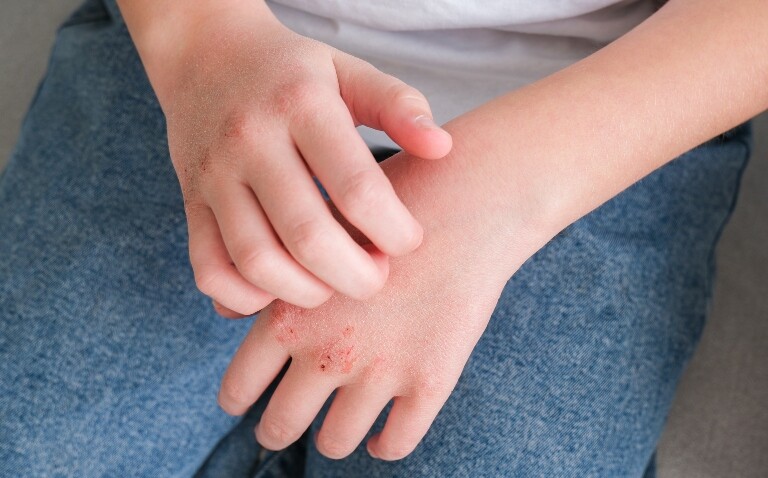
A standardised patch test panel for the most common contact allergens in children has been proposed in a recent European analysis to improve diagnostic consistency across centres.
Contact allergy dermatitis is common in adults and children. While the European Baseline Series (EBS) has standardised patch testing in adults since the 1980s, no widely accepted series exists for children, and testing currently varies by clinical history or local protocols.
Led by researchers from Denmark and published in the journal Contact Dermatitis, the study analysed patch test data from 1,816 children aged 0–16 years (60.5% girls) collected between 2018 and 2022 across 13 centres in 12 European countries.
Results from the adult EBS and other commonly tested allergens were assessed to establish a paediatric-specific panel.
Recommending a paediatric EBS for allergy testing
A total of 17 allergens from the adult EBS met the threshold of at least 1% positive reactions in at least 500 children. These included metals such as nickel, cobalt and chromium; fragrances such as fragrance mix I; preservatives such as methylisothiazolinone; and topical agents including neomycin and lanolin. Tixocortol-21-pivalate was also included due to its clinical relevance despite lower prevalence.
Seven additional allergens not in the adult series were recommended for inclusion in the paediatric EBS, including hydroperoxides of linalool and limonene, Amerchol L-101 and sorbitan sesquioleate.
Hydroperoxides of linalool and limonene showed particularly high positivity rates (16.8% and 15.3%, respectively). This was particularly evident in younger children, prompting recommendations for lower test concentrations in this age group.
As the study relied on aggregated, anonymised data, the assessment of co-reactivity and individual exposure histories was limited. Furthermore, some allergens were tested in fewer than 500 children, reducing statistical confidence for inclusion.
Future directions and clinical relevance
The researchers noted that a harmonised paediatric EBS could standardise patch testing across Europe, improve diagnostic accuracy, reduce misdiagnoses and optimise dermatology resources. Early and accurate identification of allergens may also lower long-term healthcare costs linked to chronic dermatitis, they added.
Further validation of the proposed scheme, particularly in younger children and with adjusted allergen concentrations was recommended, as well as ongoing monitoring as new allergens and exposure patterns emerge.
Reference
Simonsen A et al. Contact Allergy in Children in Europe: A Proposal for a Paediatric European Baseline Series. Contact Dermatitis 2025;0:1–12.