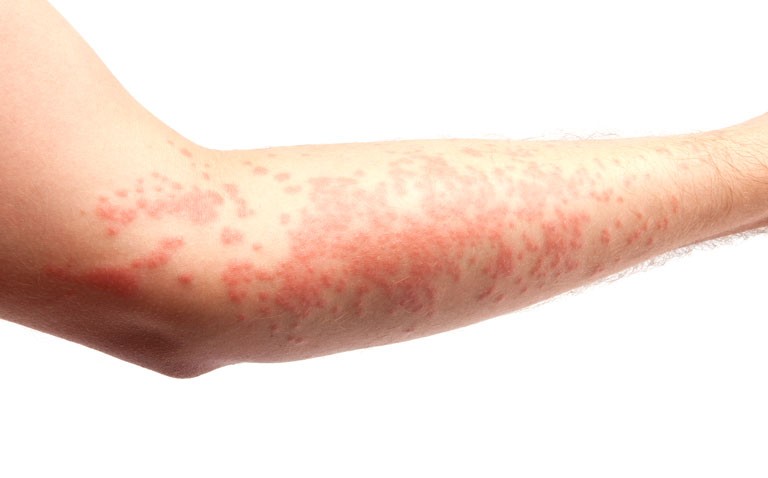
In patients with treatment-resistant chronic spontaneous urticaria, two biologics produced the largest improvement in symptoms.
Urticaria is characterised by the presence of pruritic wheals, angioedema and in some cases both. In the majority of cases, urticaria resolves within two days though when it persists for longer than six weeks, the condition is referred to as chronic spontaneous urticaria. The prevalence of this varies across the world and a recent systematic review found a prevalence of 1.4% among Asians but only 0.1% in people from North America.
All forms of urticaria are mast cell-related diseases and the symptoms due to the release of histamine and other cytokines. The condition can be manged through the use of H1 anti-histamines but evidence shows that in chronic spontaneous urticaria, antihistamines at licensed doses, are effective in less than half of all patients.
Other therapeutic options under investigation include monoclonal antibodies such as omalizumab which has been approved for the management of chronic spontaneous urticaria although the relative effectiveness of monoclonal antibodies when the condition is antihistamine-resistant is uncertain.
This led a team from the Department of Pharmaceutical care at Chiang Mai University, Thailand, to undertake a systematic review and network meta-analysis, of pharmacological therapies in antihistamine-refractory chronic spontaneous urticaria.
The team looked for randomised trials in both adolescents and adults with diagnosed antihistamine-refractory chronic spontaneous urticaria and which had used a validated measurement tool for treatment assessment.
They set the primary outcome as a change in urticaria symptoms, both hives and pruritus from baseline but also considered the unacceptability of treatment in terms of the number of patients dropping out. The outcomes were reported as standardised mean differences (SMD).
Biologics and treatment-resistant chronic spontaneous urticaria
There were 23 randomised trials of SCU with 2480 patients and a mean age ranging from 32.2 to 43.8 years. The trials compared a total of 28 different interventions and at licensed antihistamine doses and up-dosed by two to four times the licensed dose.
The most effective treatment, with a large effect size, was the monoclonal antibody ligelizumab at a dose of 72 mg (SMD -1.05, 95% CI -1.37 to - 0.73) and at the higher dose of 240 mg (SMD – 1.07, 95% CI -1.39 to – 0.75). Omalizumab produced a moderate effect size at a dose of 300 mg (SMD – 0.77, 95% CI -0.91 to -0.63).
There were no significant differences in treatment unacceptability.
In their discussion, the authors suggested that either ligelizumab at a dose of 72 or 240 mg and omalizumab 300mg were the most effective treatments for refractory chronic spontaneous urticaria. In addition, they called for head-to-head trials to provide improved estimates for the effectiveness of these treatments.
Citation
Nochaiwong S et al. Evaluation of Pharmacologic Treatments for H1 Antihistamine–Refractory Chronic Spontaneous Urticaria. A Systematic Review and Network Meta-analysis. JAMA Dermatol 2021.