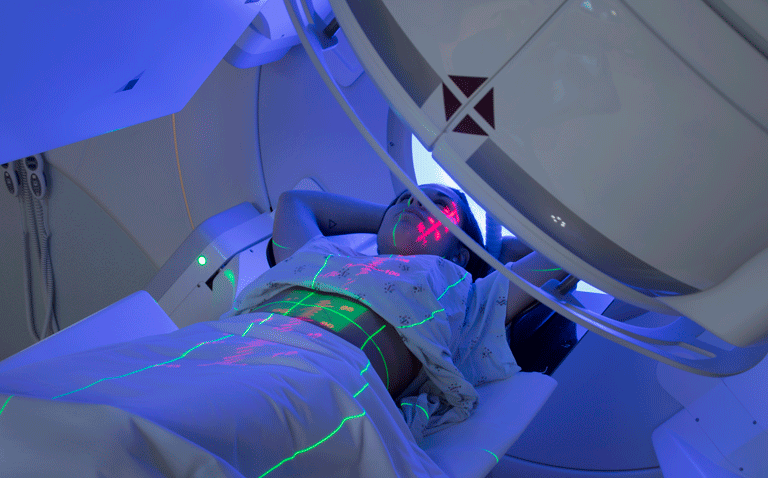
The use of oral arginine increased the effectiveness of radiotherapy in patient with unresectable brain metastases from solid tumours. This was the conclusion of a study by researchers from the Hematology and Oncology Division, Cornell University, New York, USA.
Brain metastases occur in 10% to 20% of adult patients with solid organ cancers and are 10 times more common than primary brain tumours. Use of compounds that improve blood flow to tumours might enhance the efficacy of both chemo- and radiotherapy and one suggested agent is nitric oxide, which has been shown to act as an intrinsic radio-sensitiser in vivo.
For the present study, the US researchers considered the use of arginine, which is an endogenous substrate of the nitric oxide synthase enzyme, that naturally produces nitric oxide. Although its use in cancer patients has not previously been examined, data from patients with acute metabolic strokes has shown that administration of arginine therapy yields significant therapeutic benefit.
Based on the fact that the amino acid appears to have a metabolic effect, the researchers measured levels of the tumour lactate concentration, in patients with brain metastases, which serves as a biomarker and driver of radio-resistance.
The results showed that arginine consistently and significantly reduced tumour lactate concentrations in a small number of patients with brain metastases. Based on these findings the team undertook a proof-of-concept randomised trial to explore whether arginine increased the effect of radiotherapy in patients with unresectable brain metastases from solid tumours.
Arginine and radiotherapy for brain metastases
A total of 63 patients with solid tumour cancers, including breast, melanoma and non-small cell lung cancers, and brain metastases were randomised to placebo (n=32) or oral arginine 10g which was given 60 minutes before radiotherapy.
Patients were followed for a median of five months and the overall response rate was 22% in the placebo group but 77.4% in the arginine arm, with a symptomatic response rate of 50% and 93.5% (placebo vs arginine, p = 0.002).
In addition, the number of patients free from neurological progression at six months was 82% for arginine but only 20% for placebo. Finally, disease progression was observed in only 9.6% of those taking arginine compared to 43.7% of the placebo group.
The authors also reported that in those receiving arginine, functional imaging revealed a marked reduction in tumour lactate concentration, suggesting that the amino acid induced a metabolic effect on cancerous cells.
They concluded that the amino acid could be used therapeutically in combination with radiotherapy in patients with brain metastases.
Citation
Marullo R et al. The metabolic adaptation evoked by arginine enhances the effect of radiation in brain metastases. Sci Adv 2021