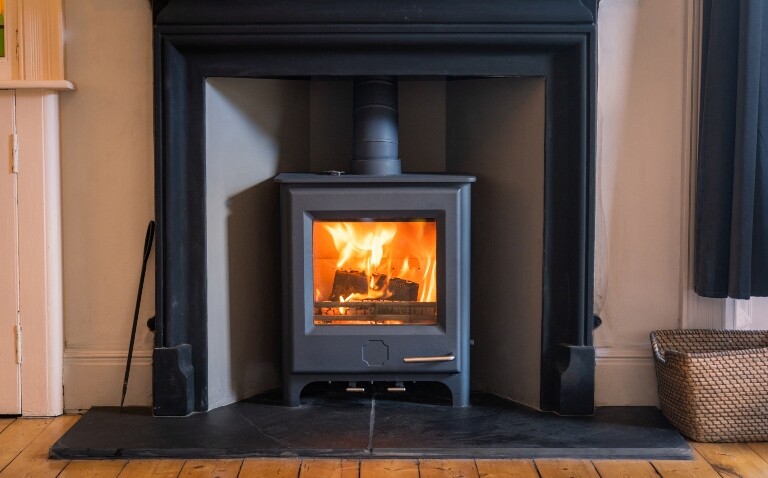
People who use wood-burning stoves for heating their homes experience a faster decline in lung function over eight years compared to non-users, a new study suggests.
Researchers at University College London (UCL) found that the use of solid fuel was associated with a more rapid decline in FEV₁, a key indicator of lung capacity and respiratory health, and is linked to an increased risk of COPD and asthma.
The findings, presented at the European Respiratory Society (ERS) Congress 2025 in Amsterdam, suggested that high levels of particulate matter from these stoves damage respiratory tissues, causing inflammation in a similar way to cigarette smoke.
Annual UK emissions from domestic wood burning have almost doubled over the past decade, rising from 3,200 tonnes in 2009 to 6,000 tonnes in 2023. The rises are driven by high fossil fuel prices and the promotion of wood as a renewable energy source. Domestic wood burning now contributes 20% of the UK’s PM2.5 emissions, which is five times more than emissions from road vehicles.
The findings highlight the need for more explicit public health guidance and regulation regarding domestic wood burning, and the researchers suggest that healthcare workers should ask their patients with lung conditions whether they use wood-burning stoves in their homes.
The findings aim to aid the development of targeted public health campaigns in areas where the use of wood-burning stoves is prevalent.
Long-term health impact
The study builds upon previous work that mapped the use of solid fuel-burning stoves across the UK. By combining data from 11,000 participants in the English Longitudinal Study of Ageing (ELSA), 25 million property-level Energy Performance Certificates (EPCs), and UK Census records, the researchers identified sociodemographic and geographic factors associated with the use of wood-burning stoves.
Using ELSA data, the team also tracked changes in lung function over time to evaluate the long-term health impacts of burning solid fuels at home. The researchers measured lung function using FEV1, quantifying the amount of air a person can forcefully exhale in the first second of a breath as a measure of lung health.
The EPC data showed that wood-burning appliances were mainly found in wealthier areas in England and were often within Smoke Control Areas – urban zones where burning is restricted.
Data from the ELSA indicated that older people were most likely to use solid fuel, and their likelihood of doing so roughly doubled with age.
Solid fuel use was also found to be widespread, even among people with existing lung conditions who are more vulnerable to air pollution.
Wood-burning stoves and lung function
Unexpectedly, some of the earliest analyses showed that people with wood-burning stoves had some of the healthiest lungs and better lung function. However, the researchers caution that this is likely due to sample bias, as wealthier individuals often have wood-burning stoves and tend to experience better health than those from deprived areas.
Dr Laura Horsfall, principal research fellow in clinical epidemiology from the UCL Institute of Health Informatics, who presented the study at the ERS Congress, explained: ‘We found that people using solid fuel had lower rates of smoking and lung disease, which can mask the true effects of solid fuel exposure. However, using repeated lung function measurements over eight years, we found that lung function declined faster among solid fuel users compared to non-users, even after adjusting for socioeconomic and housing factors. This suggests an important link between solid fuel use and respiratory decline, despite the healthier baseline of the exposed group.
‘Our study suggests that high levels of particulate matter from stoves damage respiratory tissues, causing inflammation in a similar way to cigarette smoke.’
The researchers will now investigate whether people living in or near areas with a high concentration of wood stoves, such as the wealthier parts of London, also exhibit increased rates of respiratory issues, including prescriptions for inhalers and hospital visits for lung conditions.
Responding to the study results, Professor Ane Johannessen, head of the ERS’s expert group on epidemiology and environment, based at the University of Bergen, Norway, noted a similar increase in the use of wood-burning stoves on the continent. She said that wood burners ‘should be considered a potential environmental risk factor when assessing respiratory health, especially in patients with unexplained lung function decline or chronic respiratory symptoms’.
‘Although new eco-design European wood-burners are generally considered cleaner and safer than more traditional wood stoves, many European homes still employ older wood-burners, and even the newer stoves may not be entirely risk-free,’ she added.
‘This study underscores the need for clearer public health guidance and regulation around domestic wood burning. People should be aware that these stoves could be harming them and their families, and doctors should be asking their patients about whether they are using stoves at home.’
A version of this article was originally published by our sister publication Nursing in Practice.