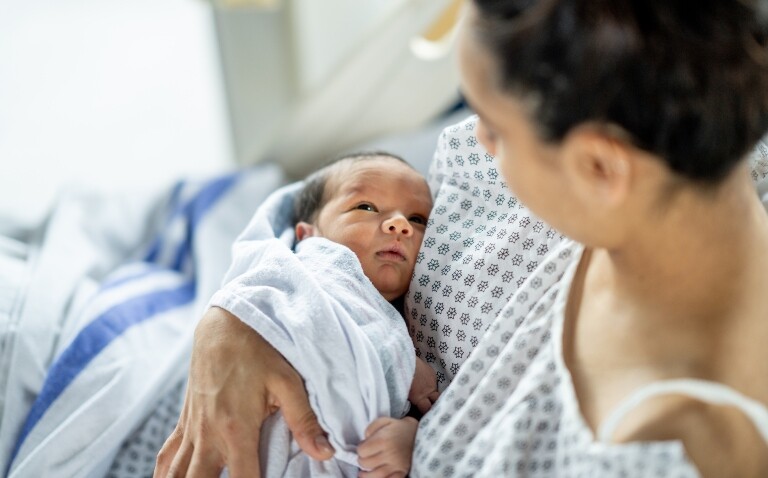
Professor Nigel Field of UCL speaks to Saša Janković about how pioneering research linking the gut microbiome in newborns to the risk of childhood viral respiratory infections is reshaping early-life strategies for lifelong health and impacting clinical practice.
Could the bacteria colonising a baby’s gut in the very first week of life shape their health in the first two years of life, and perhaps for decades to come? It seems the answer could be yes, according to the largest ongoing study of UK baby microbiomes to date.
‘What happens to you at the moment of birth and in early life has an effect on your gut microbiome, which in turn might have really profound impacts on your future health,’ says Professor Nigel Field, professor of infectious disease epidemiology and director of the Centre of Molecular Epidemiology and Translational Research at the University College London (UCL) Institute for Global Health.
This finding may well change how maternal and neonatal care is delivered in future.
Early-life microbiome composition
The ongoing UK Baby Biome Study, for which Professor Field is the principal investigator, recruited 3,476 newborns across the UK, aiming to understand how interactions between microorganisms, the immune system and clinical, social and behavioural factors during pregnancy and early life influence later health and disease.
Its latest groundbreaking results, from researchers at the Wellcome Sanger Institute and Professor Field’s team at UCL and published in The Lancet Microbe, are the first to show an association between the composition of the gut microbiome in the first week of life and hospital admissions for respiratory infections in early childhood.
Using whole genome sequencing and analysis of stool samples from 1,082 of the newborns, the researchers monitored electronic health records to track their admissions to hospital up two years of age.
They found that babies with a specific mix of gut bacteria at one week old, which was only found in some babies born vaginally, were less likely to be hospitalised for viral lower respiratory tract infections in the first two years of life.
Professor Field is quick to emphasise that understanding the long-term health effects of the early-life microbiome is both challenging and vital. ‘It’s really difficult to study, because it takes a long time to know what happens as conditions shaped in infancy may not manifest until people are in their 40s or 50s,’ he explains.
Pressing priorities
The next research challenge for the team is to move from association to causation. ‘We’ve identified that some babies, particularly those with higher amounts of Bifidobacterium longum alongside other beneficial species, had a lower risk of being admitted to hospital for viral respiratory infections,’ says Professor Field. ‘But crucially, these protective profiles were not universal, even among vaginally born infants, which highlights the importance of distinguishing between different neonatal microbiome types rather than assuming all early-life exposures have the same effect.
‘To answer that, we need to unpick the mechanisms by which gut microbes influence immune development in the first weeks of life. Are specific bacteria directly shaping immune pathways, or is it the overall microbial community that matters most?’
Large-scale, longitudinal studies such as the Baby Biome Study are designed to track these complex interactions over time, providing the statistical power and genomic resolution needed to see what is truly driving health outcomes. And this goes hand in hand with designing interventions that can be tested in clinical settings.
‘Ultimately, we want to know what the “healthy” neonatal microbiome looks like, and how we can get more babies to have it, which means pinpointing which pioneer bacteria are beneficial; understanding how factors like birth mode, antibiotics and feeding influence colonisation; and developing biotherapies that can safely and effectively optimise the infant microbiome,’ says Professor Field.
The potential lies in using this information to design targeted preventive strategies. ‘If we can identify at birth, or even before, which babies are likely to have less favourable microbiome profiles, then we can think about safe and effective interventions to improve them,’ he says, ‘which could include tailored probiotics or nutritional supplements that help establish a healthier microbial balance in the crucial first month of life.’
Microbiome in infection and beyond
As this latest study has examined only one common health outcome in children – respiratory viral infections – Professor Field stresses that the recent findings are only the beginning.
By moving towards precision approaches grounded in microbial profiling, he believes researchers may even one day ‘prevent severe respiratory infections before they happen, rather than treating them once they occur’. And that’s just the start as he says the microbiome may well have an impact on a whole range of other health outcomes, too.
‘The next step is scale: larger, longer studies that can test whether pioneer bacteria such as B. longum and B. breve are also linked to conditions like allergies, asthma, cardiovascular disease or even neurodevelopment and mental health,’ Professor Field explains.
His ambition is to study a more holistic picture of how the neonatal microbiome shapes health across the life course. This is a trajectory that will be realised in the Microbes, Milk, Mental Health and Me (4M) project that Professor Field co-leads as part of the Children Growing Up in Liverpool (C-GULL) study.
‘The 4M study is really the next generation. We’re recruiting 10,000 babies and their families and following them from pregnancy through early life with detailed biological sampling, genomics and follow-up through assessments and health record linkage,’ Professor Field explains. ‘By combining microbiome science with broader social and environmental data, we hope to disentangle how early exposures influence long-term physical and mental health, and that the insights from 4M will take us much closer to being able to design interventions that truly optimise early-life microbiomes and improve lifelong health.’
The microbiome and clinical implications
For Professor Field, one of the most important implications of this research is the opportunity to think differently about early interventions in both mothers and babies.
‘The microbiome starts forming from the moment a baby is born,’ he says. ‘That makes pregnancy, birth and the first months of life critical windows for shaping health trajectories. Future approaches to maternal and neonatal care may therefore include strategies to support healthy microbiome development, from optimising nutrition in pregnancy to considering safe ways of supplementing pioneer bacteria soon after birth.’
He is also enthusiastic about how this could reshape conversations around clinical practice. ‘Parents’ decisions about childbirth and early life are complex and personal and there’s no one size fits all when it comes to these decisions. Interventions such as caesarean sections and antibiotics are important options and often life-saving,’ he says, ‘but understanding the impacts of these interventions on the microbiome gives us a chance to mitigate them. In practice, that could mean developing maternal probiotics or neonatal microbiome therapies designed to restore balance when early disruption occurs.’
The bridge between research and practice
This, of course, is an opportunity for multidisciplinary collaboration and coproduction with the public, as Professor Field stresses that translating microbiome discoveries into real-world health benefits cannot be done by one discipline alone.
‘To move from finding associations to actually preventing childhood respiratory disease we need clinicians, epidemiologists, microbiologists, immunologists, data scientists and industry – all working together with families and communities,’ he says. ‘Large-scale cohort studies like the Baby Biome Study and C-GULL/4M projects are only possible through this type of collaboration, bringing together cutting-edge genomics with clinical expertise and public health perspectives.’
Professor Field also underlines the importance of partnership beyond academia: ‘If we are to develop safe, effective microbiome-based interventions – whether that’s new probiotics, nutritional supplements or other therapies – we’ll need regulators, policymakers and industry at the table too.’
As such, he sees collaboration as the bridge between research and practice that can ultimately have long lasting positive impacts on patient care. ‘By pooling expertise across sectors, the science of early-life microbiomes can be translated into interventions that reduce hospital admissions for respiratory infections and ultimately improve childhood health outcomes,’ explains Professor Field. ‘‘If we can get this right, we have the potential to improve maternal and infant health not just in the short term, but across the whole life course.’