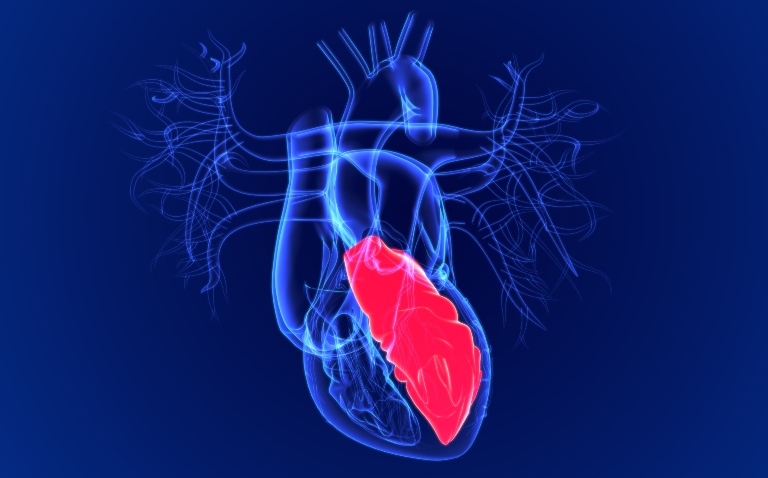
Women with moderate-to-severe aortic regurgitation experience higher mortality during medical management despite less marked ventricular dilatation, suggesting that sex-specific volumetric thresholds may improve the timing of intervention.
Left ventricular (LV) dilatation is a fundamental criterion for risk assessment and surgical decision-making in chronic aortic regurgitation. However, current international guidelines rely on uniform LV size thresholds regardless of sex, despite growing evidence of sex-specific differences in cardiac remodelling.
Therefore, a multicentre cohort study, recently published in JAMA Cardiology, examined whether sex-specific linear and volumetric LV measurements were differentially associated with mortality in patients with aortic regurgitation.
The study specifically assessed sex differences in LV remodelling, as measured by the LV end-systolic diameter index (LVESDi) and LV end-systolic volume index (LVESVi), and their associations with outcomes during medical management and after aortic valve surgery.
Between December 2003 and December 2022, data were collected for 808 asymptomatic patients with at least moderate-to-severe aortic regurgitation and preserved LV ejection fraction (LVEF ≥50%). The mean age was 56 years, and women comprised 40% of the cohort (n=320).
Symptomatic patients, those with acute aortic regurgitation, those with significant concomitant valvular disease, or those with prior valve surgery were excluded.
Over a median follow-up of seven years (interquartile range 4–11), 323 patients (40%) underwent aortic valve surgery.
Aortic regurgitation mortality
Although mean LVESDi was comparable between women and men at baseline (both 20 mm/m²; P=0.77), men exhibited significantly larger indexed LV end-systolic volumes (39 vs 31 mL/m²; P<0.001).
During medical management of aortic regurgitation, 74 deaths were recorded and adjusted six-year survival was significantly lower in women compared with men (80% vs 89%; P=0.001).
Receiver operating characteristic analyses identified an LVESDi threshold of 20 mm/m² or more as being associated with mortality in both sexes, which is lower than current guideline recommendations. In contrast, optimal LVESVi thresholds varied by sex, at 40 mL/m² or more in women and 45 mL/m² or more in men.
Exceeding these sex-specific volumetric thresholds was associated with more than a twofold increase in mortality during medical management (hazard ratio [HR] 2.43; 95% CI 1.63–3.61; P<0.001), and a significant interaction by sex was observed.
After aortic valve surgery, overall survival at six years did not differ markedly between women and men (85% vs 89%; P=0.31). However, LVESVi, analysed both continuously and using sex-specific thresholds, remained independently associated with postoperative mortality (HR per 5 mL/m² increase: 1.14; P=0.002), whereas LVESDi was not.
The retrospective, observational design was highlighted as a major limitation. What’s more, indications for surgery were not consistently documented, and cause-specific mortality data were unavailable. Consequently, analyses were restricted to all-cause mortality, which further limited the findings, the authors said.
Reliance on uniform LV size thresholds may therefore delay referral, particularly in women, who experience worse outcomes despite less apparent remodelling.
As such, incorporating sex-specific LVESVi cut-offs into clinical decision-making for aortic regurgitation could improve risk stratification and narrow the observed mortality gap, the authors concluded.
However, they added that further prospective studies are justified to confirm these thresholds and inform future guideline updates.
Reference
Santi PL et al. Sex Differences in Left Ventricular Remodeling for Risk Stratification of Patients with Aortic Regurgitation. JAMA Cardiol 2026; Jan 21:e2555249.