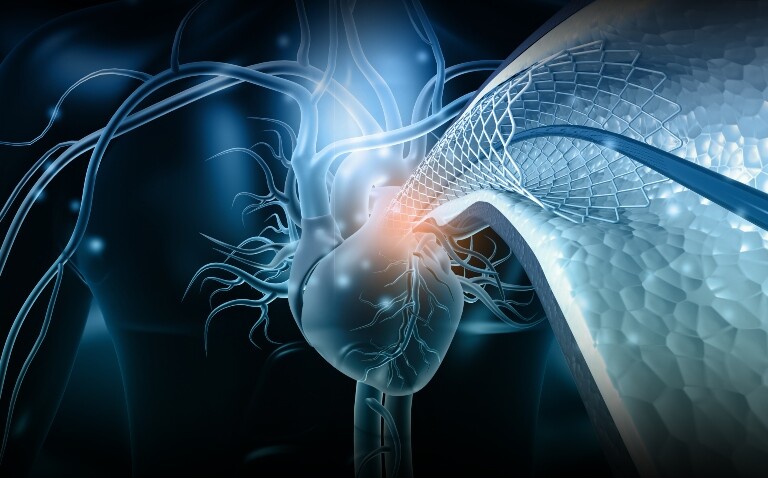
The inaugural European Association of Percutaneous Cardiovascular Interventions Summit highlighted how interventional cardiology is evolving beyond technical success, emphasising new data focused on patient selection, systems of care and long-term outcomes. Here, Andrea Porter outlines some of the key takeaways.
Percutaneous cardiovascular interventions (PCI) have become a mainstay of modern cardiology, offering catheter-based treatments for conditions such as obstructive ischaemic heart disease and structural heart disease, often without the need for open heart surgery.
Within this fast-moving clinical landscape, the European Association of Percutaneous Cardiovascular Interventions (EAPCI) Summit 2026 represented a notable milestone as the first dedicated meeting organised by EAPCI under the umbrella of the European Society of Cardiology (ESC).
This research digest synthesises key data and discussions from the meeting, reflecting a broader shift in interventional cardiology towards prioritising outcomes beyond procedural success alone.
EAPCI Summit asks whether more primary PCI means fewer deaths
A thought-provoking analysis at the EAPCI Summit examined the relationship between the provision of primary percutaneous coronary intervention (PPCI) and mortality from acute myocardial infarction across Europe.
The analysis drew on the latest publicly available data from 21 European countries from sources such as the ESC Atlas of Cardiology and ESC Atlas in Interventional Cardiology, the World Health Organization, the Institute for Health Metrics and Evaluation, and Eurostat.
It examined PPCI procedures per million population alongside age-standardised acute myocardial infarction mortality, interventional cardiologist density, gross domestic product (GDP) per capita and ischaemic heart disease prevalence.
Associations were assessed using Spearman correlation and linear regression, with further stratification by GDP tertiles.
After adjustment for GDP per capita and ischaemic heart disease prevalence, a moderate positive correlation was observed between PPCI rates and acute myocardial infarction mortality. GDP per capita showed a moderate inverse association with mortality, while ischaemic heart disease prevalence was positively correlated.
Positive correlations between PPCI rates and mortality persisted across low-, middle- and high-income tertiles, though the association weakened as income increased. PPCI procedures per interventionalist were associated with a weak inverse correlation with mortality.
Co-investigator Dr Sukruth Pradeep Kundur from King’s College London, UK, commented: ‘One would anticipate that increased provision of primary PCI would yield lower mortality rates; therefore, we will conduct additional analyses to elucidate why this trend is not evident in our preliminary findings.
‘The observed association with procedural workload highlights the significance of operator expertise. In addition, system-level factors include inter-centre variability and the interval between symptom onset and access to primary PCI.’
SCAD: not just a pregnancy-related condition
Spontaneous coronary artery dissection (SCAD) featured prominently during the EAPCI Summit, with new data from the Serbian SCAD Registry offering rare insight from Eastern transitional countries.
The registry included 123 patients treated across 14 PCI centres between November 2021 and November 2024.
The cohort was predominantly female (85.4%), with a mean age of 47.5 ± 11.8 years. Most patients (68.3%) presented with ST-segment elevation myocardial infarction (STEMI), while hypertension (49.6%) and dyslipidaemia (46.3%) were the most common risk factors.
Only 6.7% were pregnant or postpartum, indicating that SCAD largely affects non-pregnant women. Mental stress was the most frequent trigger (38.5%), while physical stress was identified in 10.7% of cases.
The left anterior descending artery was most commonly affected (56.1%).
Conservative management was favoured, with drug therapy alone used in 58.5% of cases. PCI was performed in 41.5% of cases, and stents were implanted in 28.5%.
In-hospital major adverse cardiovascular events occurred in 29 patients, including 10 deaths. Stent implantation independently predicted 30-day MACE.
Study presenter Professor Svetlana Apostolović, interventional cardiologist and full professor of cardiology in the Cardiology Clinic at the University Clinical Center of Nis in Serbia, said: ‘SCAD was most common in non-pregnant young women and menopausal women, with intracoronary imaging found to be particularly useful in enabling accurate diagnosis. SCAD often resolved fully and stent implantation was not beneficial in the majority of patients.
‘Careful observation alongside beta-blockers, blood-pressure lowering medication, cardiac rehabilitation and psychological support may improve outcomes and reduce the impact on patients’ daily lives, but more studies and trials are needed.’
Examining ACS in women at the EAPCI Summit
Women with acute coronary syndrome (ACS) remain under-represented in trials, despite cardiovascular disease being the leading cause of female mortality. The Italian GEDI-ACS registry aims to address this disparity.
Preliminary data from the first 68 women presented at the EAPCI Summit showed a median age of 68 years, with 85.3% reporting low health literacy and 42.6% experiencing anxiety or depression.
ACS was the first cardiovascular event in 86% of patients. STEMI accounted for 38.2% of cases, non-STEMI for 36.8% and unstable angina for 25%.
Notably, 38.2% had MI with non-obstructive coronary arteries, most commonly due to Takotsubo cardiomyopathy or SCAD. At 30 days, outcomes were favourable, with no deaths, strokes or re-infarctions.
Professor Alaide Chieffo, principal investigator of the EU-funded Gender, Diversity and Inclusion-Acute Coronary Syndromes (GEDI-ACS) registry, EAPCI president and EAPCI Summit 2026 programme co-chair concluded: ‘The GEDI-ACS registry will continue with additional enrolment and follow-up. We will also combine clinical findings with genetic and molecular data to deepen our understanding of disease mechanisms and contribute to more precise and inclusive approaches to ACS care in women.’
The potential for same-day discharge after TAVI
Transcatheter aortic valve implantation (TAVI) is now a mainstay of treatment for aortic stenosis. With advances in device technology and streamlined interventional cardiology care pathways, there is increasing attention on how quickly patients can be safely discharged after the procedure. Same-day discharge is now being explored in carefully selected cases.
In a cohort of 790 patients undergoing elective transfemoral TAVI, 279 individuals (35.3%) were identified as potentially suitable for same-day discharge at preassessment. Of these, 160 patients (57.3%) were successfully discharged home on the day of their procedure.
Patients in the same-day discharge group had a mean age of 80.4 years, and 40% were women. When same-day discharge was not achieved, the most common reasons were heart rhythm and conduction abnormalities (67.2%) or vascular complications (10.9%).
Clinical outcomes over the subsequent 30 days were similar regardless of discharge timing. Mortality at 30 days was 1.8% among patients discharged on the same day, compared with 0.8% in those who remained in hospital overnight or longer (P=0.472). Readmission rates were also comparable, at 4.4% in the same-day discharge group and 9.2% in the non-same-day discharge group (P=0.102).
Concluding his presentation, Dr Krishnarpan Chatterjee, interventional cardiologist at the James Cook University Hospital in Middlesbrough, UK, said: ‘With careful selection, we have shown that around one in five patients can be successfully discharged on the same day as their day-case TAVI procedures, without increased risk of adverse outcomes.
‘This is important for patients as it reduces the risk of complications linked to hospital stay, such as infection or delirium. It is also associated with reduced use of healthcare resources. Further studies on same-day discharge after day-case TAVI are warranted.’